Gold & Silver
18K Gold vs 999 Gold: Which Should You Actually Buy?
By Thomas Lovas Lokoy — researched and drafted with AI, then reviewed, fact-checked and approved by Thomas Lovas Lokoy (editorial policy) | Last updated: October 2026
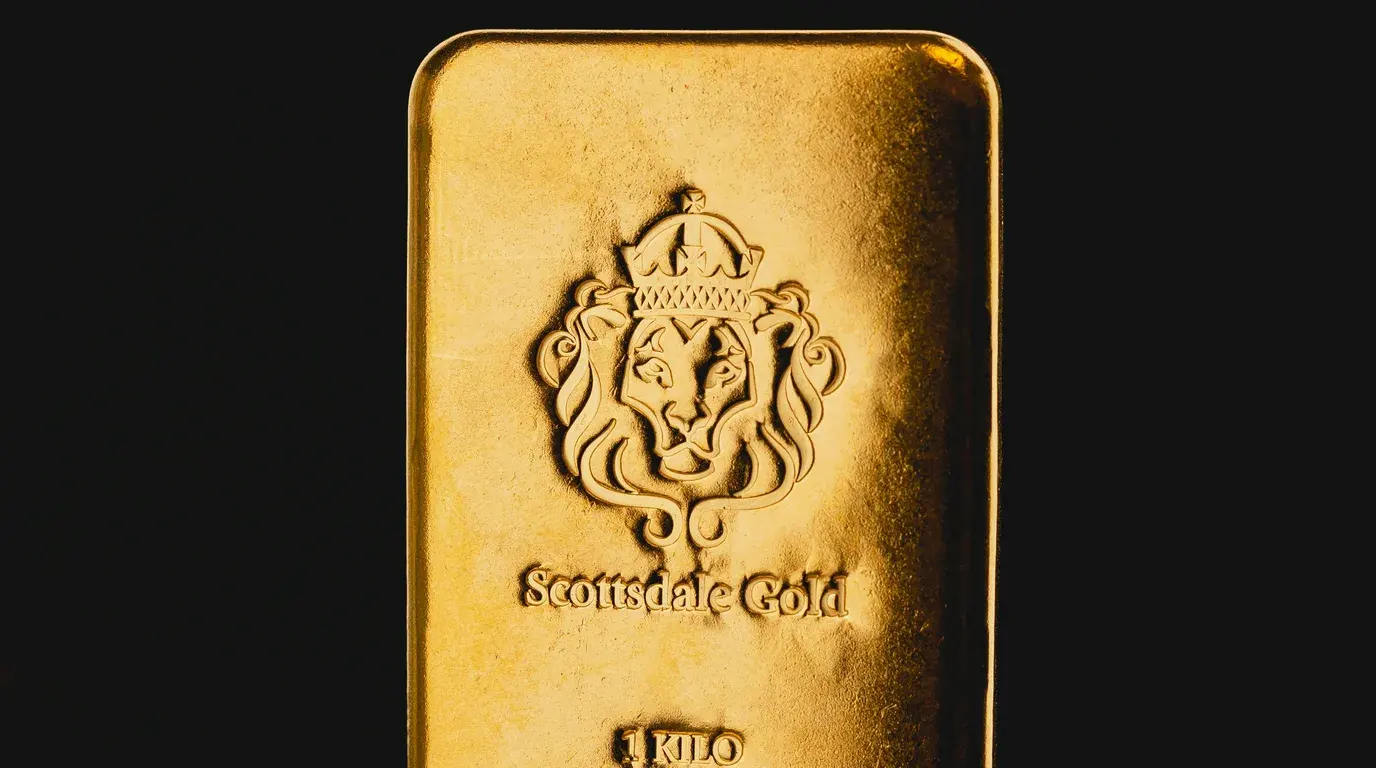
18K is 750 parts gold per thousand. 999 is 99.9% gold.
The two numbers are the same measurement written in two notations. 18K means eighteen parts gold in twenty-four, which is 75%, stamped as 750 — so 18K is neither 916, which is 22K, nor 999. The number 999 means 999 parts gold in a thousand — 99.9% — and is the same metal you would otherwise see called 24K.
Neither is better. They answer different questions. If you want the maximum amount of gold per gram and you intend to store it rather than wear it, 999 is the right answer. If you want something you can put on every morning for thirty years, 18K is the right answer, because pure gold is too soft to survive that.
That single trade-off — metal content against hardness — explains almost every purity decision in the gold market. The rest of this guide works through the conversion table, what the other 25% in an 18K piece is doing, how hallmarking law differs by country, and what each purity is realistically worth when you come to sell. If you want the wider tour of the scale rather than this head-to-head, understanding gold purity across 24K, 22K and 18K covers the same ground from the other direction.
The karat and millesimal scales are one measurement in two notations
Karat divides gold into twenty-four parts. Millesimal fineness divides it into a thousand. To convert, divide the karat figure by 24 and multiply by 1,000.
The set you will actually encounter, in descending order: 24K is 999 or 999.9 (99.9% or 99.99% gold); 22K is 916 or 916.6 (91.6%); 21K is 875; 20K is 833; 18K is 750; 14K is 585; 10K is 417; and 9K is 375.
Those are not arbitrary retailer conventions. Under Schedule 2, Part 1 of the Hallmarking Act 1973, the approved standards of fineness for gold in the United Kingdom are precisely 375, 585, 750, 916.6, 990 and 999 — a legal list, not a rounding.
Two numbers regularly confuse buyers because they sit just outside that set. The first is 995, the threshold that matters for bullion rather than jewellery, which appears below. The second is 9999, sometimes written 999.9 and read aloud as 'four nines'. That is 99.99% gold, the highest purity in ordinary commercial production. The practical difference between 999 and 9999 in a bar you are buying to hold is close to nothing: one part in ten thousand. Refiners quote it because the market rewards precision — the LBMA's Good Delivery specification requires the fineness on a large bar to be marked to four significant figures. Do not pay a meaningful premium for the extra nine.
| Karat | Millesimal fineness | Gold content | An approved UK standard under the Hallmarking Act 1973 |
|---|---|---|---|
| 24K | 999 or 999.9 | 99.9% or 99.99% | Yes, 999. The Act also lists 990 |
| 22K | 916 or 916.6 | 91.6% | Yes, 916.6 |
| 21K | 875 | 87.5% | No |
| 20K | 833 | 83.3% | No |
| 18K | 750 | 75% | Yes |
| 14K | 585 | 58.5% | Yes |
| 10K | 417 | 41.7% | No |
| 9K | 375 | 37.5% | Yes |
What carat is 999.9 gold? It is 24 carat, and the scale stops there
999.9 gold is 24 carat. There is no higher carat, because the karat scale divides gold into twenty-four parts and 24 out of 24 is all of it. The fineness number and the karat number answer the same question at different resolutions: karat in twenty-fourths, which is coarse, and fineness in thousandths, which is fine enough to distinguish 999 from 999.9 where the karat scale cannot.
That is why every high-purity gold product you will see is described as 24K regardless of whether it is stamped 999 or 999.9. Both are 24 carat. The difference between them is one part in ten thousand of metal content, not a difference in grade. If a listing implies that 999.9 is a higher carat than 999, the listing is wrong.
The same logic disposes of a related question. A mark reading 995, or a quoted purity of 99.50%, is 995 parts gold per thousand. Divide by 1,000 and multiply by 24 and you get 23.88 — which rounds to 24 carat in ordinary description, and which is why 995 bars are routinely sold as 24K bullion even though they are not 999.
Why 999 gold is too soft for jewellery you actually wear
Gold in its pure state is one of the softest metals in practical use. It is famously malleable, and that same property is what makes a 999 ring a poor idea. A pure gold band picks up scratches from a car key, deforms out of round under normal hand pressure, and wears thin at the contact points over years rather than decades. Prongs holding a stone in pure gold will bend and eventually release it.
Alloying fixes this. Adding copper, silver, palladium, zinc or nickel produces a solid solution in which the foreign atoms disrupt the movement of dislocations through the crystal lattice. The metal becomes harder and considerably more resistant to abrasion and permanent deformation.
This is why bullion is 999 and wedding bands are not: the bar sits in a vault and never touches anything, while the ring is a piece of structural engineering worn on a moving joint. Our gold purity guide for jewellery buyers matches each karat, from 9k to 24k, to the pieces it suits. If your question is really which of the two formats to buy rather than which purity, gold jewellery versus bullion compares the premiums and resale side by side.
Measured hardness puts numbers on this, but only with the condition attached. Vickers hardness (HV) depends on the exact alloy recipe and on whether the metal is annealed — soft, as it comes out of the furnace — or work-hardened by rolling, drawing or hammering. So the table below gives each figure with its condition and its source rather than one number per karat. The fine-gold figures come from Christopher Corti of the World Gold Council (Metallurgy of Microalloyed 24 Carat Golds, Santa Fe Symposium, 1999), who quotes them for chuk kam 24 carat gold of 99.0% or 99.5% purity; he did not give a separate figure for 999 or 999.9. The named alloy rows come from Cooksongold's published property sheets for its yellow gold alloys, where the work-hardened figure is the one after a 40% reduction of area. Two things stand out. Annealed 18K is at least four times harder than annealed fine gold. And hardness does not simply rise as the karat falls: in these figures annealed 14K is slightly softer than annealed 18K, and the two 18K sources differ by 30 HV because the alloys differ.
| Gold (alloy as tested) | Annealed | Work-hardened | Source |
|---|---|---|---|
| 24K chuk kam, 99.0% or 99.5% gold | HV 20 to 30 | HV 50 to 80 (cold worked) | Corti, World Gold Council, 1999 |
| 22K standard yellow gold-copper-silver | about HV 52 | about HV 140 | Corti, World Gold Council, 1999 |
| 22K yellow, Cooksongold 22ct DS (91.75% gold) | 75 ± 5 HV | 145 ± 10 HV | Cooksongold data sheet |
| 18K standard yellow gold-silver-copper | HV 150 | HV 225 | Corti, World Gold Council, 1999 |
| 18K yellow, Cooksongold 18ct HB (75.1% gold) | 120 ± 10 HV | 215 ± 10 HV | Cooksongold data sheet |
| 14K yellow, Cooksongold 14ct AY (58.6% gold) | 100 ± 10 HV | 190 ± 15 HV | Cooksongold data sheet |
| 9K yellow, Cooksongold 9ct DF (37.6% gold minimum) | 115 ± 15 HV | 225 ± 15 HV | Cooksongold data sheet |
What the other 25% does: colour, and where white, rose and yellow come from
In an 18K piece, 750 parts are gold and 250 parts are something else. That 250 parts is not filler — it is the design decision that sets the colour.
Copper pushes the alloy red; an 18K rose gold uses copper as the dominant addition, and the more copper, the pinker and harder the result. Silver, and to a degree zinc, keeps the alloy closer to a pale yellow and softens the copper's redness. White gold is the interesting case: gold is inherently yellow, so a white gold alloy uses a bleaching element — historically nickel, increasingly palladium — and even then most white gold is rhodium-plated to achieve the bright cool white people expect. That plating wears. A white gold ring showing a warm tint at the shoulders after a few years has not been mis-sold; it needs re-plating, which is routine and inexpensive. Our guide to rose, yellow and white gold goes further into how the alloy choice changes the look.
The consequence for buyers is that colour and purity are independent choices only up to a point. You can have 18K in yellow, white or rose. You cannot have 999 in anything but yellow, because there is nothing in it to change the colour with. If a seller offers you rose gold at 999, the description is wrong.
A hallmark is only worth what the law behind it guarantees
This is the part most purity guides skip, and it is the part that determines whether the number stamped on your piece means anything.
In the United Kingdom, a hallmark applied by an assay office is a guarantee of fineness tested by independent assay rather than asserted by the seller. Three marks are compulsory: the sponsor's mark identifying who submitted the article, the millesimal fineness mark, and the assay office mark showing which office tested it. The traditional fineness symbol and the date letter are optional additions. Because the mark is struck after independent testing, a UK hallmark is a materially different quality of assurance from a manufacturer's own stamp — how to read a gold hallmark walks through the symbols one by one.
In the United States there is no assay office and no compulsory independent testing. The Federal Trade Commission's Jewelry Guides at 16 CFR 23.3 reserve unqualified use of the word 'gold' for articles composed throughout of fine 24 karat gold; an alloy of less than 24 karat may be described as gold only where a correct designation of the karat fineness immediately precedes the word. Tolerances come from the National Stamping Act: three parts per thousand for an article containing no solder, and seven parts per thousand where the tested part contains solder. A US karat stamp is therefore a representation by the seller — enforceable as a deception matter, but not independently assayed.
India goes further than either. The Bureau of Indian Standards permits hallmarking at six caratages under IS 1417:2016 — 14K (585), 18K (750), 20K (833), 22K (916), 23K (958) and 24KS (995) — and since 1 July 2021 a BIS hallmark has consisted of three elements: the BIS logo, the purity in both caratage and fineness, and a six-digit alphanumeric Hallmark Unique Identification number, or HUID, unique to the individual item and traceable by the buyer.
Hong Kong regulates at the point of sale rather than through an assay office. Under its Trade Descriptions marking rules for gold and gold alloy, a retailed article must bear a fineness mark in the specified form; the invoice must state the fineness (part by part where parts differ, and the weight where the whole article is 足金 / chuk kam); and a notice of not less than 210 mm × 297 mm setting out the legal requirements must be displayed prominently at the point of supply. If you buy high-purity gold in Hong Kong and receive no fineness mark and no invoice stating it, something is wrong.
The practical rule for a cross-border buyer: check what mechanism stands behind the number before you trust it, and keep the invoice in every jurisdiction. If the stamp is all you have, the practical checks for spotting fake gold are worth running before you pay.
Resale: melt value, the retail markup, and the 995 line that matters
Here is where purity stops being a matter of taste.
If you sell gold for its metal, you are paid on the pure gold it contains. A 10 gram piece at 999 contains 9.99 grams of gold; the same 10 grams at 750 contains 7.5 grams. Before comparing two prices, convert both to a price per gram of pure gold. That is the only apples-to-apples number, and it is the single most useful habit a gold buyer can develop. Note that the gold price itself moves daily — read a live spot quote at the moment you transact rather than relying on any figure printed in an article, including this one, which is why no price appears here.
What you will not get back is the making charge, the design premium and the retail margin. On mainstream jewellery those can dwarf the metal content and rarely transfer to a second owner. The exceptions are real but narrow: hallmarked pieces from established houses, with documentation and in demand, can hold value beyond melt. Unbranded jewellery generally cannot, at any purity — how to sell gold jewellery sets out what to expect from a buyer.
For anyone buying gold primarily as a store of value, one threshold does more work than the karat scale. Under Article 344 of Council Directive 2006/112/EC, investment gold means gold in the form of a bar or wafer of a weight accepted by the bullion markets and of a purity equal to or greater than 995 thousandths, plus gold coins of a purity of at least 900 thousandths, minted after 1800, which are or have been legal tender in their country of origin, and which normally sell at no more than 80% above the open market value of the gold they contain. That is the definition the EU's VAT exemption for investment gold hangs on, and it is why 995 rather than 999 separates investment-grade bullion from everything else.
The wholesale market draws the same line. The LBMA's Good Delivery technical specification sets a minimum acceptable fineness of 995.0 parts per thousand fine gold for a large gold bar, with a gold content between 350 and 430 fine troy ounces — roughly 10.9 to 13.4 kilograms — and requires the refiner's stamp, an assay mark, the fineness to four significant figures, a serial number and the month and year of manufacture.
Tax treatment varies by country and changes. Treat the paragraph above as the shape of the rule, not as guidance on your own position, and confirm the current treatment where you live before you rely on it.
How to choose, by what you are actually going to do with it
If you are buying metal to hold, buy 999 or 9999 bars and coins from recognised refiners and mints, and check the product clears 995 fineness so it stays inside the investment-gold definition and resells without an argument. Compare dealers on the all-in price per gram of pure gold, not the headline figure — how to buy gold bullion covers the premium maths in detail.
If you are buying a ring or a bracelet for daily wear, buy 18K or 14K. You are paying for a piece of metal that has to survive a decade of impacts, and the hardness is worth more to you than the extra gold. Prefer 18K for the warmer colour and a higher intrinsic floor; 14K where price matters most — hardness depends on the specific alloy and whether it has been work-hardened (see the table above), not on karat alone.
If you are buying something worn occasionally and valued partly for its gold content — a heavy chain, a gift piece, a bangle in the Indian or Chinese tradition — 22K or 999 is a defensible choice, and in those markets it is the normal one. Accept that it will mark, and store it separately from harder jewellery.
In every case, insist on a fineness mark and an invoice that states the fineness. In the UK the mark carries an independent assay behind it; in India you can verify the HUID yourself; in Hong Kong the invoice is a statutory requirement. An unmarked piece with no paperwork is not a bargain, whatever number the seller says in the shop.
Gold prices move, sometimes sharply, and gold pays no income. Nothing here is financial advice — match the purity to the use, and treat any resale value as a consequence of that choice rather than the reason for it.
What this guide deliberately does not quantify
Three things are left unquantified on purpose, because a plausible-looking number would be worse than a gap. Hardness used to be a fourth; it now has the table above, with every figure tied to its alloy, its condition and its source, because a single HV number per karat would still be misleading.
The exact minimum fineness for the 足金 / chuk kam designation is stated inconsistently across sources. The marking, invoice and point-of-sale obligations described above are confirmed from Hong Kong Customs and Excise; the numeric threshold is not, so it is omitted.
Nickel release limits for jewellery under REACH Annex XVII are omitted for the same reason. Gold itself very rarely causes contact dermatitis while nickel commonly does, which is why someone reacting to a 9K or 14K white gold ring will often wear 18K or 22K without trouble — but if the precise regulatory limit matters to you, read entry 27 of Annex XVII directly rather than trusting a secondary summary.
No gold price appears anywhere in this guide. Spot moves daily and any figure published here would be wrong within a day of writing.
Gold and collectibles carry risk and prices fluctuate — nothing here is financial advice. Consider your own situation or speak to a qualified adviser.
Related Collections
Sources
- legislation.gov.uk/ukpga/1973/43/schedule/2
- assayofficelondon.co.uk/hallmarking/what-is-a-hallmark
- law.cornell.edu/cfr/text/16/23.3
- legislation.gov.uk/eudr/2006/112/title/XII/chapter/5
- lbma.org.uk/publications/good-delivery-rules/technical-specifications
- bis.gov.in/hallmarking-overview/hallmarking-faqs/hallmarking-faq
- customs.gov.hk/en/service-enforcement-information/consumer-protection/trade-desc
- santafesymposium.org/s/1999-Corti-Dr-Christopher-Metallurgy-of-Microalloyed-24K-Golds.pdf
- cooksongold.com/downloads/files/bullion/22ctDS_properties_sheet.pdf
- cooksongold.com/downloads/files/bullion/18ctHB_properties_sheet.pdf
- cooksongold.com/downloads/files/bullion/14ctAY_properties_sheet.pdf
- cooksongold.com/downloads/files/bullion/9ctDF_properties_sheet.pdf
Co-founder & Editor, NorwegianSpark SA
Thomas Lovas Lokoy is the co-founder of NorwegianSpark SA, the Norwegian company (org. 834 984 172) that runs NordicGilt. He reviews, fact-checks and approves every article before it is published. Articles are researched and drafted with AI assistance; Thomas is responsible for what goes live. Corrections: thomaslien@norwegianspark.com.
Frequently Asked Questions
Is 999 gold better than 18K gold?
Neither is better in the abstract — they are built for different jobs. 999 gold is 99.9% pure and holds the most metal value per gram, but it is soft enough to scratch, bend and wear noticeably in daily use, which is why bars and coins are made from it and wedding bands generally are not. 18K is 750 parts gold per thousand, and the remaining quarter of the alloy makes it far harder and much better at surviving years of wear. Buy 999 to hold, 18K to wear.
What carat is 999.9 gold?
24 carat. The karat scale divides gold into twenty-four parts, so 24 out of 24 is pure gold and there is nothing above it. Both 999 and 999.9 are described as 24K; the fineness notation simply has enough resolution to tell them apart, at one part in ten thousand of metal content. A 995 mark, or a purity quoted as 99.50%, works out at 23.88 twenty-fourths and is also sold as 24K bullion.
What does 999 mean on gold?
It is a millesimal fineness mark: 999 parts gold in every 1,000, or 99.9% pure. It describes the same metal the karat scale calls 24K. You will also see 999.9, sometimes written 9999 and read as 'four nines', which is 99.99% — one extra part per ten thousand, and not worth a meaningful premium on a bar you intend to hold.
Is 18K gold 916 or 999?
Neither. 18K gold is 750 — eighteen parts gold in twenty-four, or 75% — and 750 is the fineness mark it carries. 916 is the mark for 22K gold (91.6%), and 999 is 24K, effectively pure gold at 99.9%. If a piece sold as 18K is stamped 916 or 999, the description and the mark do not agree, and it is worth asking the seller which one is right. What a mark legally guarantees also depends on where the seller is, as our [guide to where to buy gold jewellery online](/journal/best-places-buy-gold-jewellery-online-2026) sets out country by country.
What is the difference between 916 and 999 gold?
916 is 22K — 91.6% gold with the balance in alloy metals — and it is a mainstream jewellery standard in India, where it is one of six caratages the Bureau of Indian Standards permits for hallmarking under IS 1417:2016. 999 is effectively pure gold. The 916 piece contains about 8% less gold by weight but is appreciably harder, which is why it can be worn as a bangle or chain and 999 mostly cannot.
What is the difference between 995 and 999 gold?
Four parts per thousand of metal content — and one important legal line. Under Article 344 of Council Directive 2006/112/EC, investment gold means bars or wafers of a purity equal to or greater than 995 thousandths. The LBMA's Good Delivery technical specification sets the same 995.0 minimum acceptable fineness for a large gold bar. Anything at or above 995 clears both tests; below it, you are outside the investment-gold category regardless of how close the number looks.
Continue Reading
gold silver
The Spot Price Is Not the Price. What You Actually Pay for Gold.
Part 1 of 3. Spot is a wholesale reference for unallocated metal in tonne lots. What a retail buyer pays sits above it — and the gap is the single most controllable cost in physical gold.
gold silver
What You Actually Get Back When You Sell
Part 3 of 3. Buying is quoted, selling is negotiated. What determines the offer you receive, why the two ends of the spread are not symmetrical, and how to sell without giving the gap away twice.
gold silver
How to Buy Investment Gold: Bars vs Coins
Bars carry the lowest premium; coins are easier to sell in parts. How to read a premium, which fineness actually qualifies as investment gold, and what to keep.