Gold & Silver
Gold as an Investment — Does It Belong in Your Portfolio?
By Thomas Lovas Lokoy — researched and drafted with AI, then reviewed, fact-checked and approved by Thomas Lovas Lokoy (editorial policy) | Last updated: October 2026
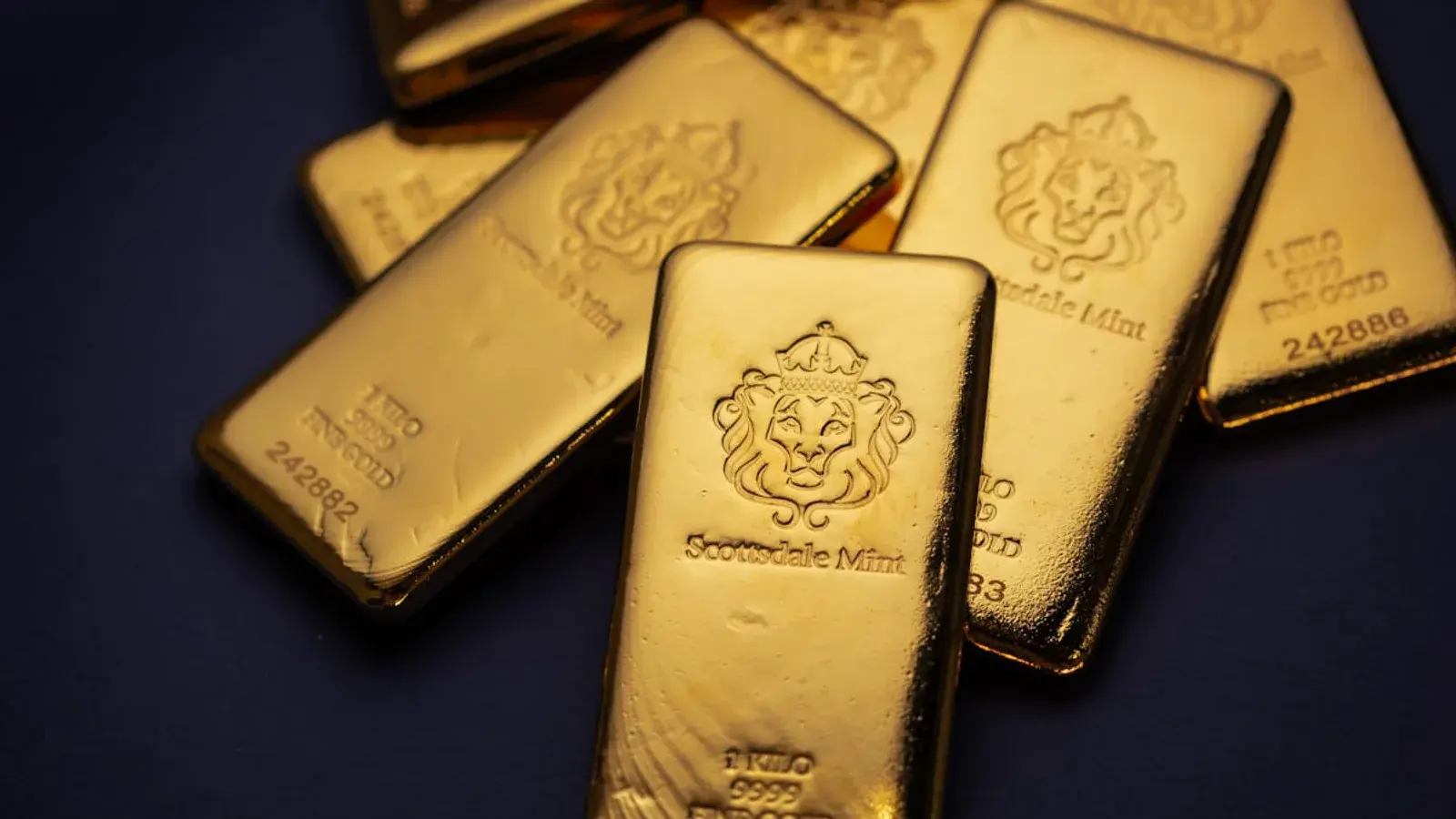
Gold provokes strong opinions. Calmly: it's neither a magic hedge nor useless — it's a specific tool with specific properties.
What gold does well. It has held value across centuries and tends to hold up when confidence in currencies or markets wobbles. It carries no credit risk — a gold coin isn't anyone's liability, which is the property that distinguishes it from almost every other asset. And it has historically shown low correlation with equities, so a modest allocation can smooth a portfolio's ride during equity turmoil. These are real, durable properties. Note that correlation is a historical observation, not a guarantee about any future episode.
What gold doesn't do. It produces no income — no dividends, no interest, no rent. A bar sitting in a vault earns nothing; its only return is price change. Over very long periods, broad equities have generally outpaced gold. So an all-gold strategy sacrifices the compounding that productive assets provide. It is also worth separating the metal from the jewellery: gold jewellery versus bullion shows how much of a jewellery price never comes back.
How people actually use it. The common framing is a modest allocation held as portfolio insurance rather than as a growth engine. We deliberately do not print a recommended percentage: the ranges quoted around the internet trace back to no single authority, they vary with the arguer's position, and the right figure depends entirely on your horizon, your other holdings and your tolerance for a position that can sit flat for years. The point isn't to get rich on gold; it's to hold something that behaves differently when everything else falls together.
A worked example: what a small allocation does. Take an illustrative portfolio of 100,000: 95,000 in shares and 5,000 in gold. If shares fall 20 percent and gold rises 10 percent, the portfolio is worth 76,000 + 5,500 = 81,500 — down 18.5 percent rather than the 20 percent of an all-share portfolio. If gold falls 10 percent alongside shares, it is worth 76,000 + 4,500 = 80,500, down 19.5 percent. The numbers are invented to show the mechanics, and they make the honest point: a modest allocation softens a fall at the margin; it does not prevent one, and in years when shares rise it drags. Our gold portfolio simulator runs the same arithmetic with returns you choose yourself, side by side with the same portfolio at 0 percent gold.
What 2025 showed. The World Gold Council’s full-year report put the average LBMA PM gold price at US$3,431.5 an ounce, 44 percent higher than in 2024, with total demand above 5,000 tonnes for the first time, bar and coin demand up 16 percent and central-bank buying down 21 percent but still large at 863.3 tonnes. A year like that is when allocations drift upwards by themselves and when new buyers are tempted to oversize. If you hold gold for a defined job, rebalancing back to your chosen share after a big move keeps it doing that job.
Physical vs paper. Physical bullion (bars, coins) means no counterparty risk but real storage and security considerations — gold storage options covers the trade-offs. Gold ETFs and funds are convenient and liquid but reintroduce counterparty exposure and fees; gold ETFs versus physical gold compares them directly. Many holders blend both. For physical, buy recognised products from a transparent dealer such as Silver Gold Bull, check the fineness meets the investment-gold rules (in the UK, at least 995 for bars and 900 for coins), and keep your documentation — how to buy investment gold sets out the premium and fineness rules.
The honest summary. Gold can play a sensible defensive role in a diversified portfolio. It is not a substitute for productive assets and it can sit flat for years. Size the allocation to its job — insurance, not engine. If you decide to hold the metal itself, the gold investment guide covers the practical steps from there.
The rest of the metals and watch coverage — dealer reviews, storage, spreads — sits in the expert guides and reviews.
This is general information, NOT financial advice. Consider your own situation or speak to a qualified adviser.
Gold and collectibles carry risk and prices fluctuate — nothing here is financial advice. Consider your own situation or speak to a qualified adviser.
Related Collections
Where to Buy
Sources
Co-founder & Editor, NorwegianSpark SA
Thomas Lovas Lokoy is the co-founder of NorwegianSpark SA, the Norwegian company (org. 834 984 172) that runs NordicGilt. He reviews, fact-checks and approves every article before it is published. Articles are researched and drafted with AI assistance; Thomas is responsible for what goes live. Corrections: thomaslien@norwegianspark.com.
Frequently Asked Questions
What percentage of a portfolio should be in gold?
There is no authoritative number, and we deliberately do not quote one. The percentages circulated online trace back to no single source and vary with whoever is arguing. What is defensible is the framing: gold is generally held as insurance rather than as a growth position, so the size should follow from what you want it to protect against, your time horizon and what else you hold. That is a question for your own circumstances or a qualified adviser, not for an article.
Is physical gold or a gold ETF the better choice?
Physical gold has no counterparty risk but comes with storage and security considerations. Gold ETFs are more convenient and liquid but reintroduce counterparty exposure and carry ongoing fees. Many holders use both — physical for the core holding, an ETF for smaller or more tactical exposure.
Does a small gold allocation really protect a portfolio?
It cushions rather than protects. In an illustrative portfolio of 95 percent shares and 5 percent gold, a 20 percent fall in shares with a 10 percent rise in gold leaves the whole portfolio down 18.5 percent instead of 20; if gold falls 10 percent too, it is down 19.5 percent. The effect grows with the allocation, but so does the cost of holding an asset that pays no income. Test your own numbers with our gold portfolio simulator.
How did gold perform in 2025?
Strongly. The World Gold Council put the average LBMA PM price for 2025 at US$3,431.5 an ounce, 44 percent above 2024, with total demand above 5,000 tonnes for the first time. A year like that is exactly when buyers are tempted to oversize a position; gold can also fall sharply and stay down for years.
Continue Reading
gold silver
Silver vs Gold — Which to Stack in 2026?
Stacking means building a physical holding piece by piece. How silver and gold compare for that job — entry cost, VAT, space, premiums — and how regular buying works in practice.
gold silver
PAMP Suisse 1 oz Lady Fortuna Gold Bar: The Definitive Investor Review & Liquidity Guide
An exhaustive technical teardown of the PAMP Suisse 1 oz Lady Fortuna .9999 fine gold bar.
watches
Best Luxury Watch Brands 2026 — Compared
From entry luxury to grail-tier, the watch world ranks heritage, movement and resale. How the major houses compare and where the value sits.