Gold & Silver
How to Buy Gold Bars: A Beginner's Complete Guide
By Thomas Lovas Lokoy — researched and drafted with AI, then reviewed, fact-checked and approved by Thomas Lovas Lokoy (editorial policy) | Last updated: October 2026
The Short Answer
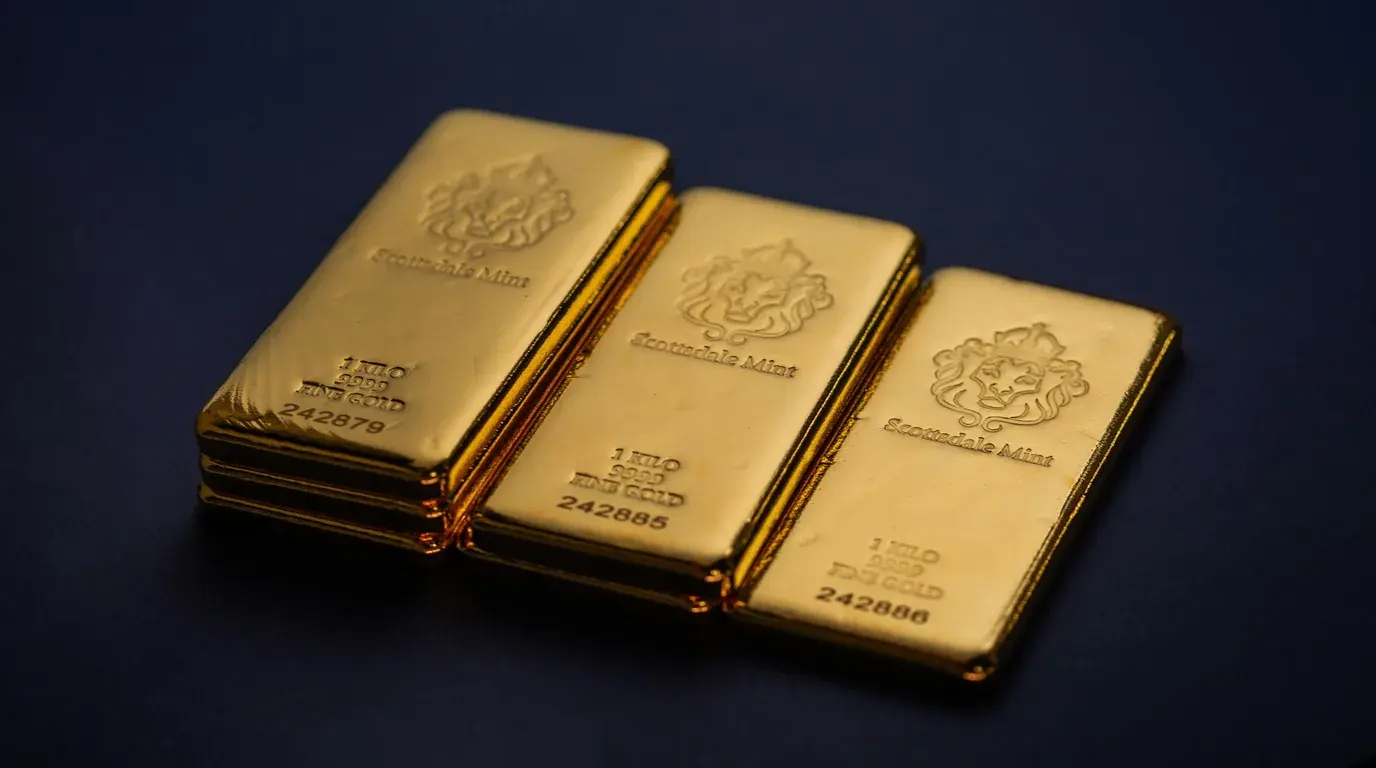
Buy a bar from a refiner on the LBMA Good Delivery list, in a size where the premium is a modest share of the metal value — one ounce, 50 g or 100 g for most first purchases — from an established dealer, at the lowest total landed cost per gram you can find, with the assay packaging intact. Keep the packaging and the invoice, store the bar in a graded safe or an allocated vault, and compare any future offer the same way: price per gram of fine gold against spot per gram.
That is the whole method. The sections below explain why bar size drives the premium, which marks matter and why, how to do the arithmetic, what to check when the parcel arrives, where to store it, and what the tax definition of investment gold means for the size you choose. If you are weighing bars against coins first, our guide to buying gold bullion covers that decision.
Bar Sizes and Why Size Sets the Premium
| Bar size | Fine gold | Who buys it | Premium pattern |
|---|---|---|---|
| 1 g, 2.5 g, 5 g | 1–5 g | Gifts, first purchases, savings plans | Highest per gram; in the EU, 1 g bars may be excluded from the VAT exemption |
| 10 g, 20 g | 10–20 g | Small regular buyers | High per gram, falling |
| 1 oz (31.1035 g), 50 g | 31–50 g | The most common first serious bar | Moderate; widely recognised, easy to sell |
| 100 g, 250 g | 100–250 g | Established private holders | Low per gram; still saleable to any dealer |
| 500 g, 1 kg | 500–1,000 g | Larger private holders, trade | Lowest per gram; sold whole, sometimes slower to place |
| 400 oz Good Delivery | 350–430 fine oz | Central banks, bullion banks, vaulted investment platforms | Wholesale; not a retail product |
The premium falls as the bar grows because the work is roughly fixed per bar: refining to 999.9, casting or minting, assaying, sealing in a card, insuring in transit and holding stock all cost about the same whether the bar holds one gram or a kilogram. On a 1 g bar those costs are a large share of the price; on a kilo bar they are a sliver. What you buy with a small bar is divisibility — the ability to sell part of a holding — and you pay for it up front. Our fractional gold bars guide goes into the small sizes, and our spread explainer covers why premiums move.
Recognised Refiners and What the Mark Guarantees
The gold in every bar is the same element, but the mark on it decides how easily it sells. The London Bullion Market Association maintains the Good Delivery list of refiners whose bars are accepted in the London wholesale market without question; the current gold list runs to 67 refiners. A retail bar from one of them — PAMP Suisse, Valcambi, Argor-Heraeus, Metalor, Heraeus, the Perth Mint, the Royal Canadian Mint among the names you will meet most — is accepted by dealers, banks and vaults worldwide on the strength of that mark. The wholesale standard behind it is the 400 oz Good Delivery bar: 350 to 430 fine troy ounces at a minimum fineness of 995.0, with the refiner’s mark, fineness, year and serial number cast or stamped into the top.
At retail the same refiners sell minted bars sealed in tamper-evident cards with an assay certificate and serial number — PAMP’s Lady Fortuna in CertiPAMP packaging is the best known — and cast bars at larger sizes with the marks struck directly into the metal. Valcambi’s CombiBar can be snapped into 1 g segments. Keep the card sealed: a bar removed from its packaging may need a re-assay before a dealer pays full value. Our PAMP Suisse 1 oz review looks at the most common first bar in detail, and our purity guide explains the 999.9 and 995 figures.
The Arithmetic: Comparing Offers
Convert every offer to a price per gram of fine gold and compare it with spot per gram on the same day. Take an illustrative spot price of 100 currency units per gram (the number is for arithmetic only — use the live price when you buy):
- A 10 g bar at 1,120, delivered: 112.00 per gram, a 12 percent premium
- A 1 oz bar at 3,300, delivered: 3,300 ÷ 31.1035 = 106.10 per gram, a 6.1 percent premium
- A 100 g bar at 10,300, delivered: 103.00 per gram, a 3 percent premium
- A 1 kg bar at 101,500, delivered: 101.50 per gram, a 1.5 percent premium
The offers are invented to show the shape; the shape is real. Include delivery, insurance and any card surcharge before dividing, because a cheap headline price with expensive insured post can lose to a dearer one with free delivery. Then ask the dealer what they would pay to buy the same bar back today — the buy-back spread is the other half of your cost and it is knowable before you order. For the units, our troy ounce to gram explainer has the conversions.
Where to Buy and What to Check on Arrival
Buy from an established dealer with live pricing against spot, a published buy-back policy, a verifiable trading history and a physical address, and compare the landed price per gram across two or three of them on the same day. Dealers with their own vaulting can deliver the bar straight into allocated storage without it ever being posted to you. Avoid private sellers and general marketplaces for bullion, and treat a price well below the market as a warning. Our guide to trusted gold dealers in Europe applies these checks to named firms.
When the parcel arrives, check it before you sign for anything you can refuse: the seal on the assay card intact; the serial number on the card matching the bar; weight on a 0.01 g scale and dimensions with a calliper against the refiner’s published specification. If anything is off, photograph it and contact the dealer that day. Our tutorial on testing gold at home covers the density and other checks for a bar that has left its packaging.
Storage Options and Their Costs
A home safe gives immediate access and makes insurance your problem: tell your insurer, ask what safe grade they require for the sum, and expect a valuables policy for anything material. A bank safe-deposit box adds a vault at low rent, with access in banking hours and no insurance from the bank. Allocated vault storage gives you serial-numbered custody, insurance and an annual audit for a percentage of value, and the published rates show how much the product matters: BullionVault charges 0.12 percent a year, insurance included, for a share of a Good Delivery bar; the Royal Mint’s vault charges 1 percent plus VAT a year on larger bars and coin tubes, and 2 percent plus VAT on gold bars of 1 oz and under, for your own named pieces.
The word that protects you in a vault contract is allocated — specific bars in your name, not a claim on a pool. Our storage options guide weighs the three routes, and our allocated versus segregated explainer covers the legal difference.
Tax, Where You Live, and Who Else Is Buying
In the European Union a gold bar is VAT-free if it meets Article 344 of the VAT Directive: a bar or wafer of a weight accepted by the bullion markets, at 995 thousandths or purer. Member states may exclude bars of 1 g or less, which is one more reason to start at 10 g or above. The United Kingdom runs its own investment-gold rules; Singapore exempts qualifying investment-grade metals from GST; the tax treatment in the United States, Australia, the Gulf and elsewhere differs by jurisdiction and sometimes by state, so check the rule where you live before comparing prices across borders. Our vaulting jurisdictions comparison covers the markets that advertise themselves on tax.
You are not buying alone. The World Gold Council’s full-year 2025 report recorded global bar and coin demand of 1,374.1 tonnes, up 16 percent on the year, with 420.5 tonnes in the fourth quarter, against an average LBMA PM price of US$3,431.5 an ounce — up 44 percent. Heavy retail demand is why premiums widen in busy months and why recognised bars sell quickly; it says nothing about where the price goes next. Gold can fall for years, and nothing here is financial advice.
Gold and collectibles carry risk and prices fluctuate — nothing here is financial advice. Consider your own situation or speak to a qualified adviser.
Related Collections
Sources
- lbma.org.uk/good-delivery/gold-current-list
- lbma.org.uk/publications/the-otc-guide/london-good-delivery-gold-and-silver
- legislation.gov.uk/eudr/2006/112/article/344
- gold.org/goldhub/research/gold-demand-trends/gold-demand-trends-full-year-2025
- royalmint.com/invest/discover-more/storage-fees
- bullionvault.com
- iras.gov.sg/media/docs/default-source/e-tax/gst-guide-on-exemption-of-investment-precious-metals7f0062ff-780a-4a53-90fa-e1f3b1e25770.pdf
Co-founder & Editor, NorwegianSpark SA
Thomas Lovas Lokoy is the co-founder of NorwegianSpark SA, the Norwegian company (org. 834 984 172) that runs NordicGilt. He reviews, fact-checks and approves every article before it is published. Articles are researched and drafted with AI assistance; Thomas is responsible for what goes live. Corrections: thomaslien@norwegianspark.com.
Frequently Asked Questions
What size gold bar is best for beginners?
A one-ounce (31.1 g) or 50 g bar from an LBMA-accredited refiner, or a 100 g bar if the budget stretches. These sizes are large enough that the fixed cost of minting, assaying and packaging is a modest share of the price, and small enough that any dealer will quote a buy-back on sight. One-gram and five-gram bars are affordable in absolute terms but expensive per gram, and EU member states may exclude bars of 1 g or less from the VAT exemption for investment gold. Kilo bars carry the lowest premium per gram but have to be sold whole.
How much premium should I expect to pay over the spot price?
It is not a fixed figure — it moves with the market, the dealer and the bar — but the shape is constant: the smaller the bar, the larger the premium as a share of the metal value, because the work of making and packaging a bar costs about the same whether it holds one gram or a kilogram. Compare offers by converting each to a price per gram of fine gold (one troy ounce is 31.1035 g), including delivery and insurance, and set that against spot per gram on the day. The worked example in this guide shows the method.
Which gold bar brands are the safest to buy?
Bars from refiners on the LBMA Good Delivery list — 67 gold refiners at the time of writing — are accepted by dealers, banks and vaults worldwide on the strength of the refiner’s mark. PAMP Suisse, Valcambi, Argor-Heraeus, Metalor, Heraeus and the Perth Mint are the names you will see most often at retail, usually sealed in tamper-evident packaging with an assay card and serial number. A bar from an unknown maker is still gold if it tests as gold, but you may have to pay for a re-assay before anyone buys it.
Is a gold bar VAT-free?
In the EU, yes, if it is a bar or wafer of a weight accepted by the bullion markets at a purity of 995 thousandths or better — the definition of investment gold in Article 344 of the VAT Directive. Member states may exclude bars of 1 g or less. The UK applies its own investment-gold rules; Singapore exempts qualifying investment-grade metals from goods and services tax; other countries differ, so check the rule where you live before comparing prices across borders.
Is it safe to store gold bars at home?
For a modest holding in a graded safe bolted to the floor, with the insurer told and the policy adjusted, yes. Household policies typically cap cover for precious metals at a low figure, so the insurance conversation comes before the safe purchase. Beyond the point where a valuables policy costs more than a vault, allocated storage wins: published rates run from 0.12 percent a year for a share of a wholesale bar at BullionVault to 1 percent plus VAT (2 percent for bars of 1 oz and under) at the Royal Mint’s vault for your own named pieces. Our storage guide compares the options.
Continue Reading
gold silver
How to Buy Gold: The Beginner's Complete Guide (2026)
Learn how to buy gold safely in 2026 — the ten terms every beginner needs, the five decisions behind a first purchase, a worked cost breakdown, and the beginner mistakes to avoid.
gold silver
Gold Investment in 2026: What Every Buyer Needs to Know
Gold investment guide for 2026: the five ways to own gold, what each one costs to hold, what moved the market in 2025, how tax differs by country, and the mistakes that cost buyers most.
gold silver
Silver Investment Guide 2026: How to Buy Silver — Coins, Bars, VAT and Storage
How to invest in silver in 2026: the ways to own it, why VAT changes the maths for physical silver, coins versus bars, storage costs, and what the Silver Institute expects for the market.