Watches
Best Gold Watches 2026: Value, Craft, and Legacy
By Thomas Lovas Lokoy — researched and drafted with AI, then reviewed, fact-checked and approved by Thomas Lovas Lokoy (editorial policy) | Last updated: April 2026
Why Gold Watches Hold Value
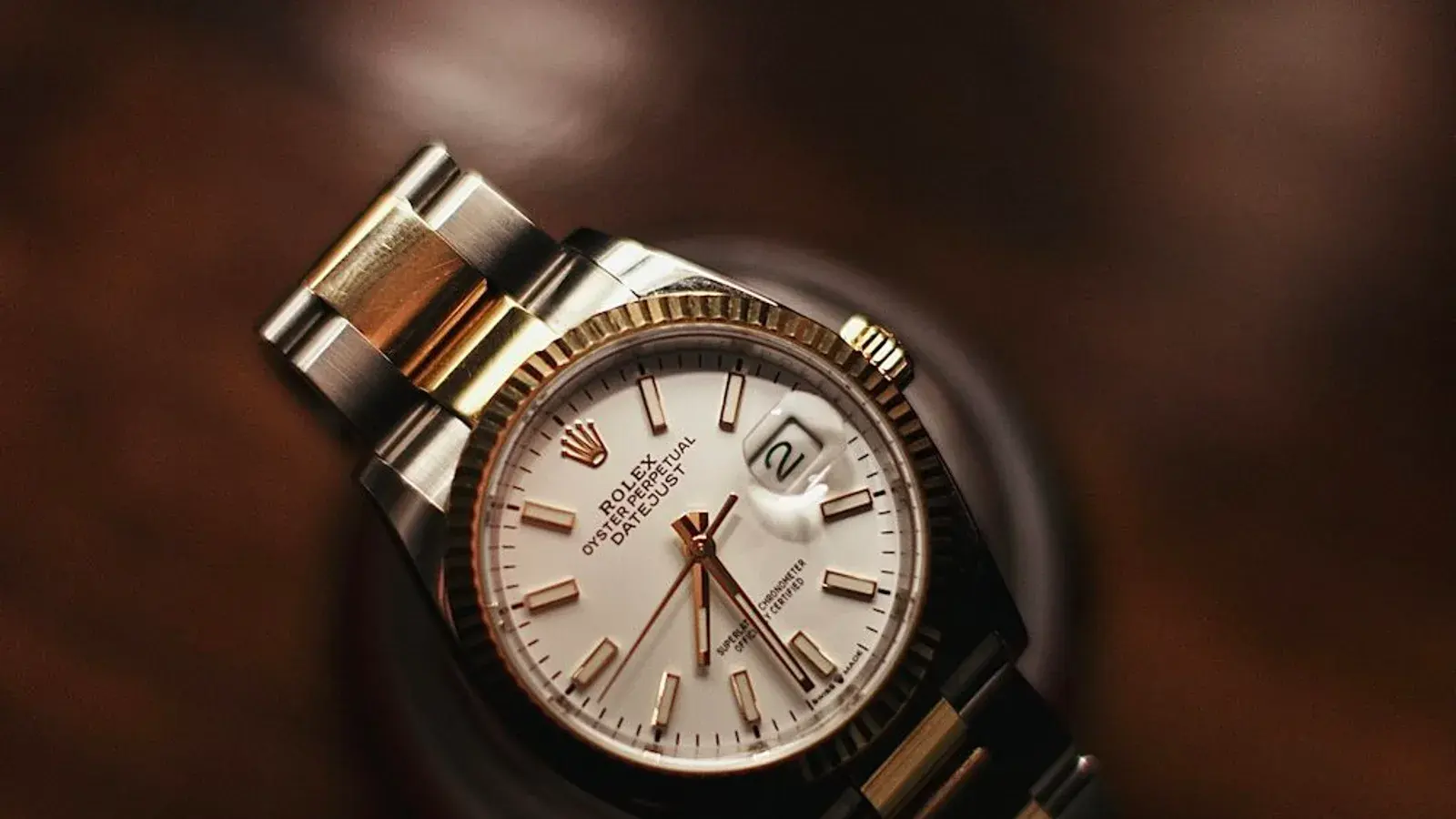
A gold watch combines three sources of value: metal content, brand and demand, and mechanical complexity. A Rolex Day-Date case and bracelet together weigh roughly 150 grams, of which around 110g is pure gold — the metal alone is substantial. Add Rolex's brand strength and controlled supply, and you have an asset that rarely depreciates.
Brands That Matter
Rolex Day-Date: the most liquid gold watch market, with the President bracelet and fluted bezel as the defining reference — and the gold watch most associated with golf’s clubhouse culture, as our piece on golf and gold explains. Patek Philippe Calatrava and Nautilus: the apex of fine watchmaking, trading at significant premiums to retail. Audemars Piguet Royal Oak in 18k: an icon of sports-watch design. Cartier Tank and Santos in 18k: elegant, wearable, and consistent performers.
What to Look For When Buying
Papers and box add 15–30% to resale value. A full service history from an authorised centre protects the movement and the paperwork. Avoid heavily polished cases — soft gold shows every polish, and repeated polishing thins the lugs. Always verify the reference and serial against the maker's records or the papers.
Pairing a Watch With Physical Metal
A gold watch gives you wearable metal with design and brand leverage. For pure gold exposure, pair it with allocated bullion from a dealer like SilverGoldBull — the two together give you visible luxury and quiet security.
Solid Gold, Gold-Capped and Plated — Know Which You Are Buying
Gold-coloured watch cases come in several constructions and the price gap between them is enormous, so the description matters more than the appearance.
Solid gold means the case is gold alloy throughout, usually 18k. It is heavy, it can be polished repeatedly over decades without wearing through, and it has intrinsic metal value. It is also the most expensive by a wide margin, and the weight is a genuine consideration for daily wear.
Gold-capped or gold-shell cases have a substantial layer of gold mechanically applied over a base, thick enough to be measured and to survive decades. This was a common construction on mid-century watches and is much better than plating.
Gold-plated is an electroplated layer, and its lifespan depends entirely on thickness. Cases marked with a micron figure — 5, 10, 20 microns — tell you what you are getting. Thin plating on a case that gets daily contact wears through at the lugs and the caseback edge.
PVD and coated finishes are modern surface treatments, hard-wearing but not gold in any meaningful quantity.
On a vintage watch this is one of the first things to establish, because a worn gold-plated case cannot be restored — re-plating a watch case is possible but rarely economic and never original. Our vintage buying guide covers the wider set of things to check.
The Practical Reality of Wearing a Gold Watch
Gold behaves differently from steel on the wrist, and the differences are worth knowing before rather than after.
It is heavy. 18k gold is substantially denser than stainless steel, so the same case in gold weighs noticeably more. On a bracelet this is significant. Some people find it pleasing and some find it tiring, and there is no way to know which you are without wearing one.
It is soft. Gold alloys used for watch cases are considerably softer than steel, so they mark more easily. A gold watch worn daily accumulates hairlines and small dings faster than a steel one, and each polish to remove them takes metal away permanently.
It is warm and it is loud. Gold reads as a deliberate choice in a way steel does not, which is fine if that is the intention.
Yellow, rose and white each age differently in appearance. Yellow gold is unambiguous. Rose gold, alloyed with copper, develops a slightly deeper tone over years. White gold on a watch case is usually rhodium-plated like white gold jewellery, and it will need the same periodic attention.
A sensible approach for a first gold watch is a dress piece on a leather strap rather than a gold bracelet: lighter, less exposed to knocks, considerably cheaper, and it puts the gold where it is seen.
Insurance, Security and the Part Nobody Plans For
A gold watch is a high-value, portable, immediately recognisable object, and it should be treated as one.
It needs specifying on your policy. Standard household contents cover carries a single-article limit that most gold watches exceed, and many policies restrict jewellery and watches further. Specifying the item, with a valuation, is what converts it from partly covered to covered. Our insurance guide covers what insurers ask for.
Away-from-home cover is separate. A watch is worn out of the house by definition, and personal-possessions cover away from the home is usually an optional extension rather than something included.
Photograph the serial number. It is between the lugs or on the caseback on most watches, and it is what allows a stolen watch to be identified if it resurfaces. Our photography guide covers the shot list.
Keep box, papers and service records together. They add real value at resale and they support a claim.
Think about where you wear it. This is not a reason to keep a watch in a safe forever — an unworn watch is a wasted purchase — but a visible gold watch does attract attention in some places, and the calculation is worth making consciously rather than not at all.
How Gold Watches Actually Resell
This is where expectations most often need adjusting, and it is worth being blunt about it.
A gold watch has two components of value: the watch and the metal. They do not move together, and for most gold watches the metal is the smaller part of the retail price but the larger part of the resale floor.
The consequence is that gold watches from brands without strong secondary demand can sell for close to their scrap value, because a buyer who does not want that particular watch is buying the case for its gold content. That is a very long way below what was paid.
Meanwhile, gold examples of models with strong secondary demand hold up considerably better, and in some cases the gold version has appreciated more than the steel — though the opposite has also been true for extended periods, and anyone stating a rule here is overreaching.
What follows practically:
- Buy a gold watch because you want to wear a gold watch, not as a metal play. If the goal is metal, our comparison of jewellery and bullion explains why buying the metal directly is the cheaper route by a wide margin.
- Favour models with an established secondary market if resale matters at all to you.
- Keep everything that came with it.
- Consider pre-owned, where the first owner has already absorbed the retail-to-market drop.
Where to Buy, and What to Check
New from an authorised dealer gives you warranty and certainty and the full retail price. For some models it also involves a waiting list.
Pre-owned from an established dealer is where most of the value is. You are buying after the first depreciation, usually with a dealer warranty, and often with service history. Our pre-owned guide covers the checks.
Auction can be good value for unfashionable gold pieces, and our auction guide explains why the hammer price is not the price.
Whatever the route, verify these before paying: the case material and hallmark; that the serial numbers on case, movement and papers agree; the condition of the case edges, which reveal previous polishing; whether the bracelet is solid or hollow-link; and when it was last serviced, since our servicing guide explains what that costs if the answer is "unknown".
For gold-toned watches at accessible prices from established Swiss brands, First Class Watches carries the mainstream names including Tissot and Longines, which is a sensible place to work out whether a gold case suits you before committing at solid-gold prices.
Related Collections
Where to Buy
Co-founder & Editor, NorwegianSpark SA
Thomas Lovas Lokoy is the co-founder of NorwegianSpark SA, the Norwegian company (org. 834 984 172) that runs NordicGilt. He reviews, fact-checks and approves every article before it is published. Articles are researched and drafted with AI assistance; Thomas is responsible for what goes live. Corrections: thomaslien@norwegianspark.com.
Frequently Asked Questions
Which gold watch holds its value best?
The Rolex Day-Date in 18k is historically the most liquid gold watch — broad demand, recognisable design, and significant metal content. Patek Philippe Nautilus and Calatrava references hold exceptional value but trade in a smaller market.
Is a solid gold watch a good investment?
Treat it as a purchase rather than an investment. A gold watch has a resale floor set by its metal content, which is well below retail, and above that floor its value depends entirely on secondary demand for that specific model. Some hold value strongly and some sell close to scrap. If the objective is exposure to gold, buying bullion directly costs a fraction of the premium and resells at a predictable price.
How can I tell if a watch case is solid gold or plated?
Look for a hallmark or karat stamp on the case, usually on the caseback or between the lugs, and for a micron figure or a plating designation such as GP or plaqué, which indicates plating. Weight is a strong clue — solid gold is noticeably heavier than a plated base metal case of the same size. Check the wear points at the lugs and the caseback edge, where plating shows a different colour beneath. For certainty, a jeweller can test it non-destructively with XRF in seconds.
Continue Reading
watches
How to Read a Watch: Complications & Gold Cases
Movements, complications, and gold cases — a primer for reading what a watch actually is.
watches
Swiss vs Japanese Watches: Which Should You Buy in 2026?
Swiss heritage and finishing, or Japanese innovation and value? We compare what 'Swiss Made' actually guarantees, Seiko and Citizen's in-house technology, and where each wins in 2026.
jewellery
Gold Jewellery Hallmarks Explained: How to Read Them
A practical guide to UK, EU and international gold hallmarks, and how to verify any piece you buy.