Pure Gold
The case for 1-gram gold ingots
By NorwegianSpark Editorial — written with AI assistance and reviewed by the NorwegianSpark SA editorial team | Last updated: September 2026
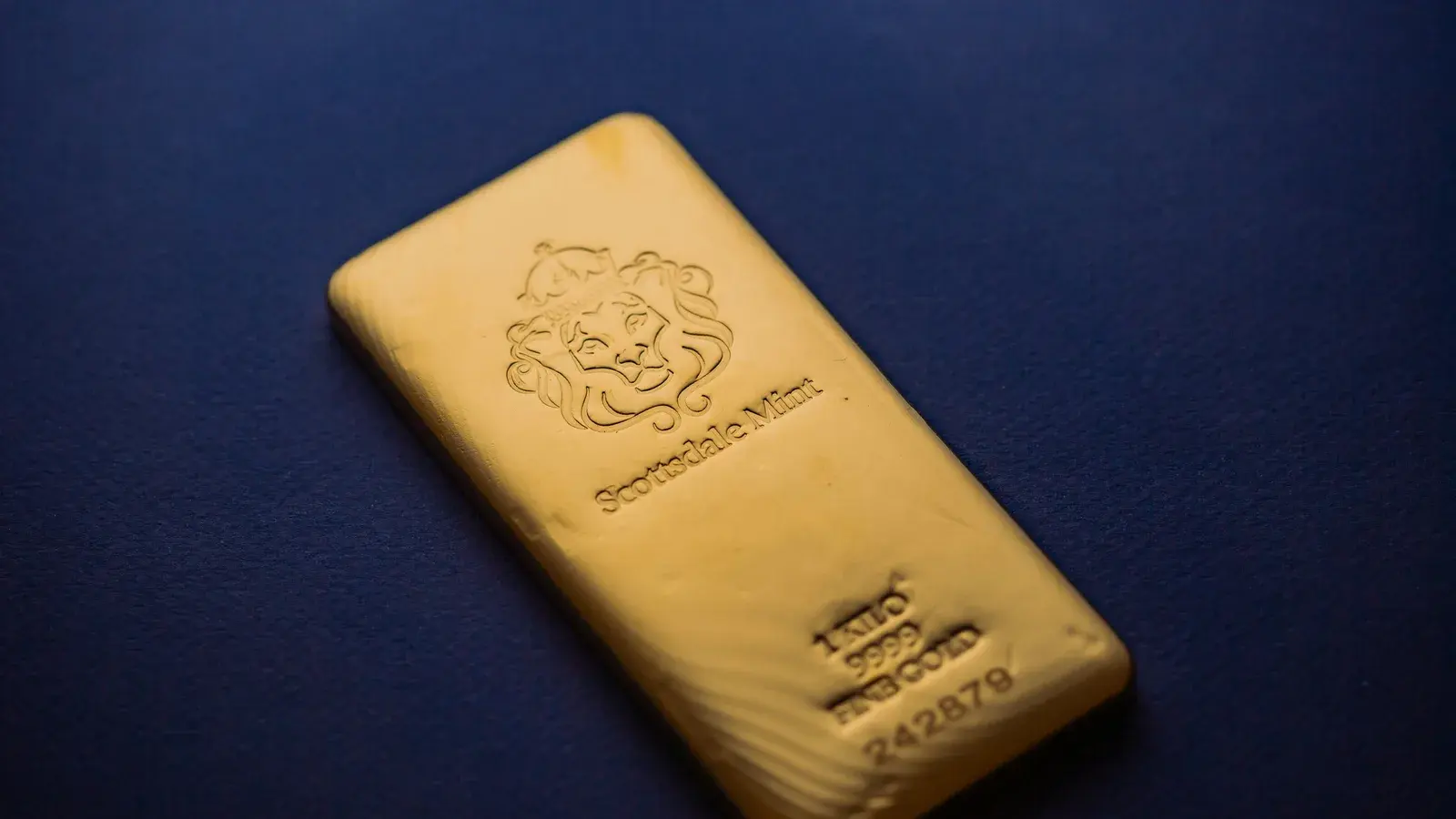
The maths versus the practice
A 1-kilogram bar costs a thousand times the spot price per gram in metal content, plus a dealer premium. CBS News reported in February 2026 that larger bars typically carry a premium of about 1% to 5% over spot.
Buy the same kilo as 1,000 separate 1-gram bars and the premium on each is far higher: the same CBS News report said a 1-gram bar might carry a premium of 20% or more. Same metal. Same final weight. Many times the markup.
Every spreadsheet says buy the kilo. We are going to make the case for the grams anyway.
This is not because we think the kilo buyers are wrong. They are not. If you are buying gold as a pure financial instrument and you have the cash for a whole kilogram available, the kilogram bar is the correct trade. The premium is dilutive, the storage is straightforward, and the secondary-market liquidity for kilo bars from recognised refiners is excellent.
But most people are not in that situation. And the framing that treats gold as pure financial instrument misses what gold is actually good for in a small private portfolio.
What 1-gram ingots actually solve
The higher premium is real. It is also not the whole picture.
A 1-kilo bar is one decision, one transaction, one storage problem, one liquidity event. You buy it at one price on one day. You store it in one place. When you sell, you sell the whole thing or none of it.
A thousand 1-gram bars are a thousand decisions you can stagger. You can buy fifty over twelve months and average your entry price. You can store them in five different places. You can give five to your daughter for her 18th birthday without breaking a financial position. You can sell ten in a difficult month without disturbing the other 990.
The kilo is an asset. The grams are a system.
For most private buyers, the system is worth the premium. Here is why, broken down honestly.
What the premium pays for
The standard line is that the premium covers manufacturing and handling costs spread over less metal. That is true, but demand matters too: the premium also reflects what the market will bear because of what 1-gram bars are used for.
People buy 1-gram bars for three reasons:
The first is fractional accumulation. Most household buyers cannot put the price of a kilo bar on the table at once. They can put $300 a month into gold for the next decade. At that pace, you accumulate gold one or two grams at a time, and the premium is just the cost of being able to participate at that scale.
The second is portability and gift-ability. A 1-gram ingot is small and is often packaged in a tamper-sealed assay card with a serial number. It fits in a wallet. It fits in a wedding card. Customs rules on carrying gold differ from country to country, so check them before you travel with any. Try doing any of that with a kilo bar.
The third is panic-resistance. If you are buying gold partly as crisis insurance, the unit of insurance that actually works in a crisis is small. A 1-kilo bar is useless in a scenario where you need to move quickly and you cannot count on banking infrastructure. The grams are useful in exactly that scenario, which is the scenario the insurance is for.
You are not buying 1 gram of gold. You are buying the option to deploy 1 gram of gold under conditions you cannot predict. That option has a price. The price is the premium.
Where 1-gram ingots stop making sense
We are not saying buy only grams. There is a reasonable allocation that mixes sizes, and the size depends on what each portion of your gold position is for.
A reasonable structure for a private buyer with NOK 200,000 - 1,000,000 to allocate to gold:
The bulk of the position — call it 70-80% — should be in the most cost-efficient size you can buy. For most Norwegian buyers that means 1-ounce bars or 100-gram bars, where the premium per gram is far lower than on single grams; see the current price on the dealer's site.
The next 15-20% should be in smaller intermediate sizes: 10-gram and 20-gram bars. Useful for partial liquidation without breaking the larger holdings. Also useful for transferring gold privately to family members.
The remaining 5-10% goes into 1-gram and 2-gram pieces. This is your emergency-bandwidth gold. You pay the higher premium specifically because you are buying optionality, not metal.
If you have less than NOK 50,000 to allocate, the structure inverts. Most of it goes into 1-5 gram pieces because you do not have the budget for the larger sizes anyway, and you should not be sweating the higher premiums on a position that small.
The Asian-market secondary
There is one situation where 1-gram pieces are not just defensible but actively superior, and that is when you buy them in a form that has secondary liquidity into the Asian gold-jewellery market.
A 1-gram PAMP Suisse ingot in an assay card is a Western bullion product. It has clean resale into Western dealer networks at a discount to spot.
A 999.9 gold ingot from a major Asian house like Chow Sang Sang is a different beast. It is sold by a Hong Kong jeweller in a form familiar to buyers in Chinese gold markets; whether it resells more easily than a Western mint bar depends on where, and to whom, you sell. For Norwegian buyers with family connections to Asia, or who travel through Asia regularly, this is a real advantage.
Chow Sang Sang's small 999.9 gold ingots are not the cheapest gold per gram you will find. That can still be worth paying for if selling within those markets applies to you. If it doesn't, ignore it and buy bullion-style bars from Western dealers.
The honest counter-argument
The case against 1-gram bars in any size is straightforward: you can replicate everything except the physical-portability and gift-ability functions by buying a larger bar and keeping the equivalent in cash for emergencies.
If you hold a 1-kilo bar and keep, in a Norwegian bank account, the cash you would otherwise have spent on the extra premium of buying in grams, you have "gold-plus-emergency-cash" for roughly the price of the kilo and its dealer premium. You have lost the privacy and the portability, but you have kept the cash you would otherwise have spent on premium.
This argument is correct on paper. It assumes:
- The bank account is accessible when you need it
- Norwegian krone holds its value relative to gold over the period in question
- You don't need to move quickly under conditions where banking infrastructure is degraded
- You are not trying to give gold privately as gifts or inheritance
If you accept all four assumptions, buy the kilo and skip the grams. If you have doubts about any of them, you are paying the premium to insure against that doubt.
What to actually buy
If you are new to gold and you want to start small without thinking too hard:
For Western mint bullion, Silver Gold Bull is one established dealer. It lists PAMP Suisse and Valcambi gold and states that shipments are insured; check which small bar sizes, packaging and delivery countries are currently available on the dealer's site.
For 999.9 gold from an Asian house, Chow Sang Sang sells small gold ingots and charms online and says it delivers to over 30 destinations; check what documentation comes with each piece. The pieces are also genuinely beautiful — they are designed to function as both bullion and small gifts, which is the entire point of buying gold in this format.
Whichever direction you go: never buy unbranded gold from anywhere. The premium on a branded ingot is the entire point of buying it. A "1 gram gold bar" from an unknown source has neither the assay backing nor the secondary-market recognition that the premium pays for. You are getting the worst of both worlds.
The summary
Spreadsheets say buy the kilo. They are not wrong about the maths.
What the spreadsheets miss is that most private gold buyers are not optimising for cost-per-gram. They are optimising for a system that survives uncertainty — including uncertainty about what they will actually need their gold to do.
The higher premium on 1-gram bars is not a tax. It is the price of granularity, portability, gift-ability, and panic-resistance. For most people allocating their own money to gold for their own reasons, those features are worth more than the premium they cost.
Build the position in the sizes that match what each portion of your gold is for. Most of it should be cost-efficient. A meaningful sliver of it should be in grams. Capital at risk: gold can fall in price as well as rise, and nothing here is financial advice.
Sources
JM Bullion spot price data, May 2026.
CBS News, "How much does one gold bar cost right now?" — covers 1-gram premiums (20%+) versus larger-bar premiums (1-5%).
GoldCore, "How Much is a Gold Bar Worth in 2026" — premium structures by bar size.
Summit Metals, "2026 Gold Price Per Gram" — covers fractional accumulation strategies and central bank purchasing context.
World Gold Council central bank demand data 2010-2025.
Gold and collectibles carry risk and prices fluctuate — nothing here is financial advice. Consider your own situation or speak to a qualified adviser.
Related Collections
Frequently Asked Questions
Why are premiums on 1-gram gold bars so high?
Much higher than on a kilo bar — CBS News reported in February 2026 that a 1-gram bar might carry a premium of 20% or more, against about 1-5% for larger bars. The standard explanation is manufacturing cost spread over less metal, but the premium also reflects what the market will bear because of what 1-gram bars are used for: fractional accumulation, portability and gift-ability, and panic-resistance. You are not buying 1 gram of gold — you are buying the option to deploy 1 gram of gold under conditions you cannot predict.
How should I split a gold allocation across bar sizes?
For a private buyer with NOK 200,000–1,000,000 to allocate: 70-80% in cost-efficient sizes (1-ounce or 100-gram bars), 15-20% in 10-gram and 20-gram bars for partial liquidation and private transfers, and 5-10% in 1-gram and 2-gram pieces as emergency-bandwidth gold. Below NOK 50,000, the structure inverts — most of it goes into 1-5 gram pieces.
Should I ever buy unbranded gold?
No. The premium on a branded ingot is the entire point of buying it — assay backing and secondary-market recognition. A "1 gram gold bar" from an unknown source has neither, so you get the worst of both worlds. Buy from dealers whose pieces ship sealed with serial numbers and assay cards.
Continue Reading
watch files
Building a 3-watch rotation under €5,000
Owning one expensive watch is fine. Owning three good ones that cover everything you actually do is better. Here is how to build a complete 3-watch rotation under €5,000 in 2026.
gold silver
Gold Sovereign vs Krugerrand: Which Coin to Buy in 2026?
The Gold Sovereign and the Krugerrand are two of the world's most traded bullion coins. We compare gold content, premiums, divisibility, UK tax and liquidity to help you choose in 2026.
watches
Swiss vs Japanese Watches: Which Should You Buy in 2026?
Swiss heritage and finishing, or Japanese innovation and value? We compare what 'Swiss Made' actually guarantees, Seiko and Citizen's in-house technology, and where each wins in 2026.