Gold & Silver
Coin Grading Explained: When a Slab Is Worth Paying For
By NorwegianSpark Editorial — written with AI assistance and reviewed by the NorwegianSpark SA editorial team | Last updated: October 2026
The Short Answer
Third-party grading by services such as PCGS and NGC authenticates a coin, assigns it a grade on the 1-to-70 Sheldon scale and seals it in a numbered holder. That is worth paying for on scarce, collectable coins where authenticity is a real question and adjacent grades are priced very differently. It is rarely worth paying for on modern bullion bought for its metal: a slab adds a collector premium you will not get back from a dealer buying by weight.
The scale at a glance (as NGC lists it).
| Grade band | Numbers | What it broadly means |
|---|---|---|
| Poor, Fair | PO 1, FR 2 | Barely identifiable |
| About Good to Very Good | AG 3, G 4–6, VG 8–10 | Heavily worn |
| Fine to Very Fine | F 12–15, VF 20–35 | Moderate to light wear |
| Extremely Fine, About Uncirculated | XF 40–45, AU 50–58 | Slight wear on high points |
| Mint State / Proof | MS/PF 60–70 | Never circulated; NGC defines 70 as no post-production imperfections at 5x magnification |
| Details | No number | Surface problems, such as cleaning, that preclude a numeric grade |
A worked decision. Suppose a coin sells raw for 500, slabbed at a middling grade for 560 and at the top grade for 900 (illustrative figures), and grading, insured shipping and handling cost you 80 in total. If you expect the middling grade, grading loses you 20 (560 − 500 − 80). Only a real chance of the top grade makes it worthwhile — and a Details result for an old cleaning can leave the coin worth less than raw. Price the outcomes, not the hope, and check the service’s current fees before sending anything.
What Third-Party Grading Actually Is
A third-party grading service takes in a raw coin, authenticates it, assigns a grade, and seals it in a tamper-evident plastic holder — a slab — with a label carrying the grade and a unique certification number. The two names that dominate the market are PCGS and NGC, and a few others operate at lower trade acceptance.
Three separate services are bundled in that transaction and it is worth separating them, because you may want one and not the others.
Authentication is a professional opinion that the coin is genuine, backed by a guarantee. For anyone buying outside their expertise, this is the real product.
Grading is an opinion on condition against a published scale. It is a considered opinion by experienced people, and it is still an opinion — the same coin resubmitted can come back a point different.
Encapsulation protects the coin physically and makes substitution difficult, which is why slabbed coins trade more easily sight-unseen.
What grading is not is a valuation. The slab does not say what the coin is worth, and the relationship between grade and price is set by the market, not by the grader.
The 70-Point Scale, Briefly
The Sheldon scale runs from 1 to 70 and originated in the mid-twentieth century as a way of pricing early American cents. It is now applied far beyond that.
Circulated grades run from P-1 (Poor — barely identifiable) up through G (Good), VG (Very Good), F (Fine), VF (Very Fine), EF/XF (Extremely Fine) and AU (About Uncirculated, roughly 50–58), where wear is confined to the highest points of the design.
Uncirculated grades are MS-60 through MS-70 — Mint State, with no wear at all, distinguished by the number and severity of bag marks, the quality of the strike, and the lustre. Proof coins use the parallel PF/PR designations.
Modifiers matter as much as the number. A `+` indicates the high end of a grade. Designations like `DCAM` (Deep Cameo), `PL` (Prooflike) or `FS` (Full Steps, on certain series) mark specific visual qualities that carry premiums. And `Details` is the one to watch for: a Details grade means the coin has a problem — cleaned, scratched, damaged, environmental damage — and is graded for wear only. Details coins sell at a large discount and are the most common trap for a buyer skimming labels.
Where the Slab Earns Its Keep
There are situations where paying for grading is straightforwardly rational.
Buying outside your competence. If you cannot yourself distinguish a genuine early sovereign from a good cast copy, the authentication guarantee is worth real money. Our piece on how fakes are detected explains what you would otherwise need to test for.
Scarce and early material, where condition drives a large part of the price and where a grade is effectively the market's shared language. Two AU-58 examples of the same scarce date are comparable objects in a way that two raw coins described as "lovely original" are not.
Selling into an auction or a distant buyer, where the slab substitutes for trust and widens the pool of people willing to bid without inspection.
Registry collecting, where the grading services maintain competitive sets and the grade is the entire point of the exercise.
In all four cases you are in the collector market by intent, and the premium is the cost of entry.
Where It Destroys Value
The mirror image is more common and costs more people money.
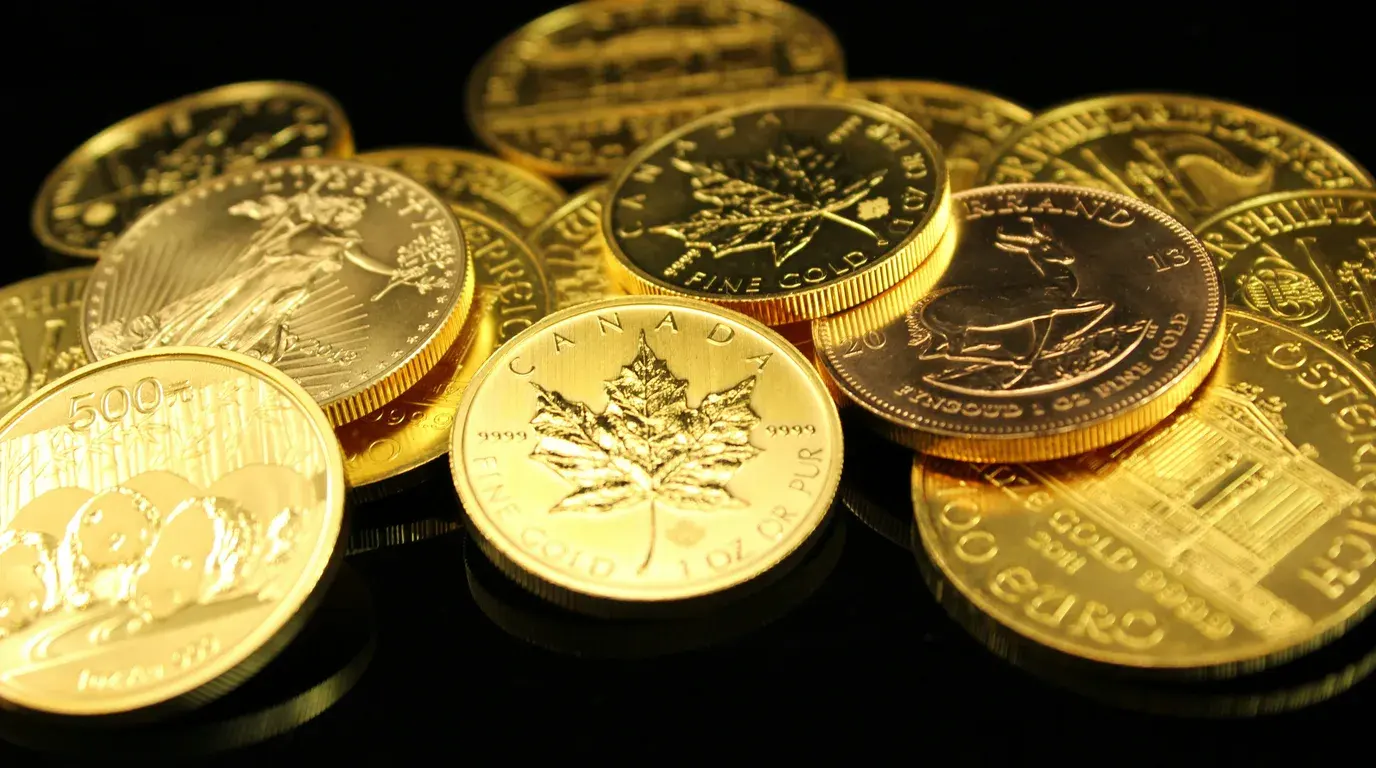
A modern bullion coin — a current-year Britannia, Maple Leaf, Eagle or Krugerrand — is produced in enormous quantity to a consistent standard. Grading one does not make it scarcer and does not make the metal heavier. What it does is add a numismatic premium on top of the dealer premium you already paid over spot, and that combined premium is what you lose on the way out if your buyer is pricing metal.
The marketing around graded modern bullion leans on phrases like *first strike*, *early releases* and *flag label*, all of which describe when the coin arrived at the grader or what is printed on the insert, not the coin. Some of them command premiums in a collector sub-market; none of them is metal.
The test is simple and worth applying before every purchase: if you sold this tomorrow to a dealer buying bullion, would they pay you anything for the holder? For a modern bullion issue, the answer is generally no. Our guide to what you actually pay over spot sets out the arithmetic.
Reading a Slab Before You Buy
Whether you are buying online or across a table, the sequence is the same.
Start with the certification number and look it up on the grading service's website. The major services publish the number, the coin, the grade, and often photographs. A number that does not resolve, or resolves to a different coin, ends the conversation.
Read the full label, not just the number. Look for `Details`, for a cleaning notation, and for the exact date, mint mark and variety — the difference between two varieties of the same year can exceed the difference between two grades.
Inspect the holder for signs of tampering: a reseal usually leaves a seam that does not match, a slightly different plastic tone, or an insert that sits imperfectly.
Then look at the coin anyway. Grading is an opinion, and within any grade there are coins at the top and the bottom. Buy the coin, not the number — an attractive, well-struck example graded a point lower is a better object than a marginal one at the higher grade, and often cheaper.
A Practical Position
For metal exposure, buy raw, widely traded bullion coins in the standard sizes and keep the premium as low as you can. Silver Gold Bull and its silver range list sovereign and mint issues in the forms that trade most easily, and our comparison of sovereigns and Krugerrands covers which of those resells best.
For collecting, treat grading as the price of a liquid, trusted market and use it deliberately — on scarce material, where the grade means something.
And keep the two activities in separate mental accounts. The clearest thinking in this space comes from knowing, before you click, which of the two you are doing.
Gold and collectibles carry risk and prices fluctuate — nothing here is financial advice. Consider your own situation or speak to a qualified adviser.
Related Collections
Frequently Asked Questions
What does MS70 mean?
MS stands for Mint State, meaning the coin was never circulated, and 70 is the top of the Sheldon numeric scale. An MS70 coin shows no post-production imperfection visible at 5x magnification. MS69 is one step down and looks identical to almost everyone. The price gap between the two can be large on modern issues, which tells you that you are buying a grading opinion at the margin rather than a visibly better coin.
Is a graded coin guaranteed genuine?
Authentication is the most valuable thing grading provides, and the major services stand behind it with a guarantee. The sealed holder also protects the coin and makes it harder to swap. But a guarantee is only as good as the company issuing it, and the holder itself can be counterfeited — fake slabs with real-looking labels exist. Verify the certification number on the grading service's own website against the photographs they hold, which takes a minute and defeats most fakes.
Should I grade a coin I already own?
Only if the expected grade would move the price by more than the cost of grading plus shipping and insurance both ways, and that is a narrow set of coins. Common modern bullion is almost never worth grading. Scarce dates, early issues, and coins where the difference between two adjacent grades is significant can be. Sending a coin in also risks a grade lower than you hoped, or a details designation for cleaning, which reduces value.
Does grading matter if I am buying for the metal?
No, and this is the single most common expensive mistake in the space. If your goal is ounces of gold or silver, a graded coin makes you pay a numismatic premium on top of the metal premium, and when you sell, a dealer buying for metal will not pay you back for the plastic. Buy raw bullion for metal exposure and graded coins only when you deliberately want to be in the collector market.
Continue Reading
gold silver
Where to Vault Gold: Switzerland, Singapore, Dubai and the Alternatives
Jurisdiction risk, VAT-free zones, reporting obligations and access. How to choose where your metal physically sits.
gold silver
Gold Miners vs Royalty Companies: Two Very Different Ways to Own Leverage
Why mining equities do not track the gold price, what a royalty and streaming model changes, and where each fits alongside physical metal.
gold silver
Buying Gold and Jewellery at Auction: The Real Cost of the Hammer
Buyer's premium, VAT on the premium, and condition reports. What the hammer price leaves out, and how to bid without overpaying.