Gold & Silver
The Spot Price Is Not the Price. What You Actually Pay for Gold.
By NorwegianSpark Editorial — written with AI assistance and reviewed by the NorwegianSpark SA editorial team | Last updated: 2026-08-08
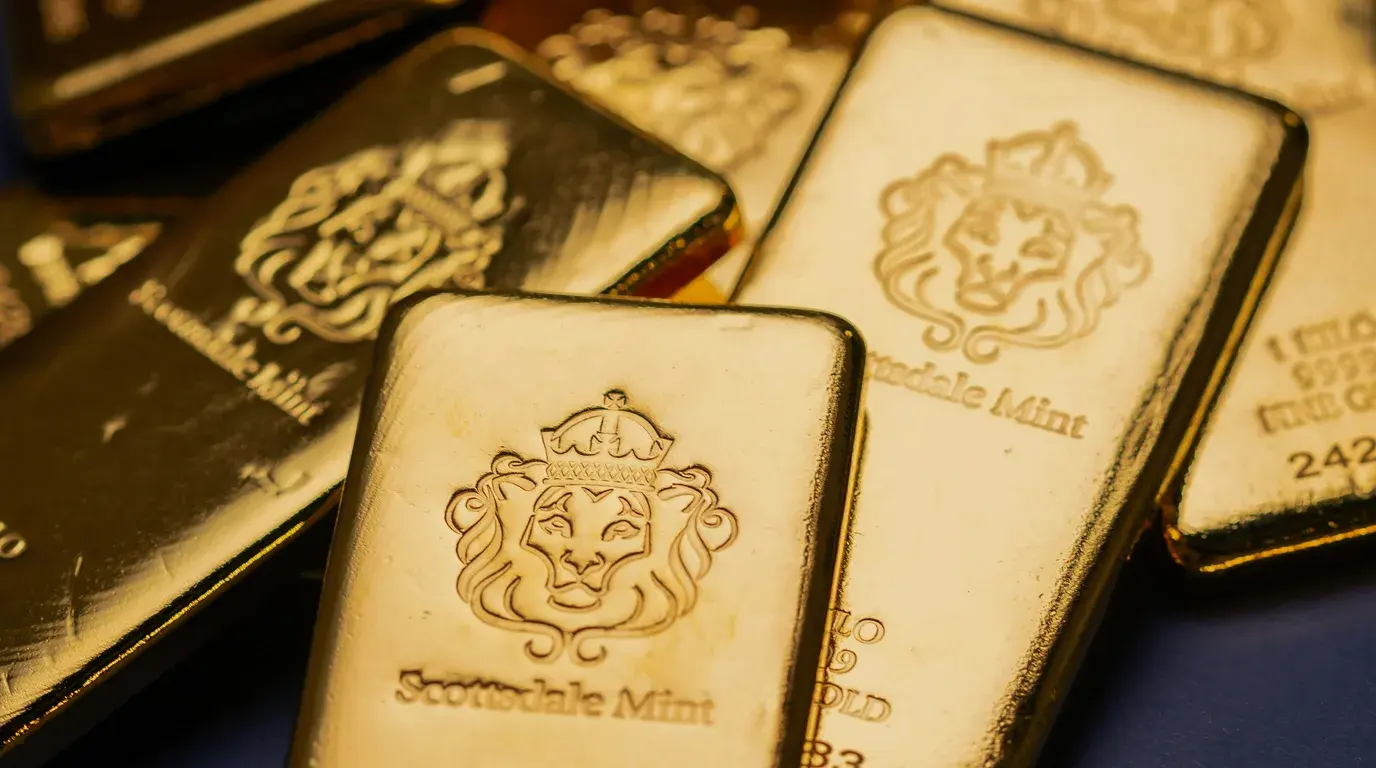
What spot actually is
The spot price is a wholesale reference for large, unallocated trades between institutions. It describes metal that mostly never moves and is never in your hands. It is a benchmark, not an offer.
Everything that turns that benchmark into a coin in a drawer costs money: refining to investment purity, minting, assay and packaging, distribution, insurance in transit, and a dealer holding stock in a market that moves daily. The premium is where all of that sits.
Why small pieces cost more per gram
Minting a one-gram ingot and minting a kilo bar are not remotely proportional in cost. The fixed work per piece is similar, so the smaller the unit, the more of that fixed cost each gram carries.
This is why fractional coins and very small ingots carry the highest premiums per gram, and why premium generally falls as unit size rises. Small units buy you divisibility — the ability to sell part of a holding — and you pay for that convenience up front.
The four things that move the premium
Product recognition. Widely traded sovereign coins and major-refiner bars carry premiums that reflect how easily they resell.
Unit size. Larger units, lower premium per gram, less flexibility on exit.
Market conditions. In periods of heavy retail demand, premiums widen independently of spot — sometimes sharply, and sometimes long after the spot move that caused the demand.
Where you buy. Dealer overheads and payment method both feed into the number quoted to you.
The comparison worth making
Compare the total landed cost per gram, not the headline premium. That means the metal price, plus premium, plus shipping and insurance, plus any payment surcharge, divided by the grams that actually arrive.
That single figure makes otherwise incomparable offers comparable, and it routinely reorders which dealer looked cheapest. Our guide to buying gold bullion covers the mechanics of the purchase itself.
Where this is heading
The premium you pay is only half the story. The other half is what a buyer will pay you, and the two are not symmetrical — which is the subject of part three.
First, though, the category where the gap is widest by far: jewellery.
Gold and collectibles carry risk and prices fluctuate — nothing here is financial advice. Consider your own situation or speak to a qualified adviser.
Related Collections
Frequently Asked Questions
Why can I never buy gold at the spot price?
Spot is a wholesale reference for large unallocated trades. A retail coin or bar has to be refined, minted, distributed, insured and stocked by a dealer, and each of those steps is paid for by the premium added above spot.
What is a typical premium over spot?
It varies by product, size and market conditions rather than being a fixed figure. As a rule the premium falls as bar size rises, and small fractional coins carry the highest premium per gram because the minting cost is spread over less metal.
Does a lower premium always mean a better buy?
Not always. The premium you pay matters only alongside the premium you will be offered back on sale, and highly recognised products often resell more easily than obscure ones bought slightly cheaper.
Continue Reading
gold silver
What You Actually Get Back When You Sell
Part 3 of 3. Buying is quoted, selling is negotiated. What determines the offer you receive, why the two ends of the spread are not symmetrical, and how to sell without giving the gap away twice.
gold silver
How Fake Bullion Is Actually Detected
Modern counterfeits match weight and dimensions and defeat a magnet. The tests that still work, in the order a dealer performs them, and what a private buyer can reasonably do.
jewellery
Why Gold Jewellery Loses More Than Gold Bars
Part 2 of 3. Jewellery is bought as an object and usually resold as metal. That single asymmetry explains almost the entire gap between what it cost and what it fetches.