Gold & Silver
How to Buy Gold Bullion in 2026: Complete Beginner's Guide
By Thomas Lovas Lokoy — researched and drafted with AI, then reviewed, fact-checked and approved by Thomas Lovas Lokoy (editorial policy) | Last updated: October 2026
The Short Answer
Buying gold bullion well comes down to four decisions: which product (a bar from an LBMA-accredited refiner, or a legal-tender coin from a recognised mint), which dealer (one with live pricing, a published buy-back policy and a verifiable trading history), what premium you are paying over the spot price, and where the metal will live once it arrives. Get those four right and the gold price itself is the only thing left that you cannot control.
For most first-time buyers the practical answer is a one-ounce legal-tender coin — Britannia, Maple Leaf, Krugerrand, Eagle or Philharmonic — or a 50 g to 100 g refiner bar, bought at the lowest total landed cost per gram you can find, and stored either in a bolted, insured safe or in allocated vault storage. The rest of this guide takes each step in turn, including the tax definition that decides which products are VAT-free in Europe. If you want the mechanics as a checklist, our step-by-step tutorial is the companion piece.
What Counts as Investment Gold — and Why the Definition Matters
In the European Union the words “investment gold” have a legal meaning, and it decides whether you pay VAT. Article 344 of the VAT Directive (2006/112/EC) defines it as either gold “in the form of a bar or a wafer of weights accepted by the bullion markets, of a purity equal to or greater than 995 thousandths”, or gold coins “of a purity equal to or greater than 900 thousandths and minted after 1800, which are or have been legal tender in the country of origin, and are normally sold at a price which does not exceed the open market value of the gold contained in the coins by more than 80 %”. Gold that meets either test is exempt from VAT across the EU; gold that does not — a decorative medallion, a 9 carat chain, a coin priced far above its metal value — is taxed like any other good. Member states may also exclude bars of 1 g or less (Article 344(2)).
This is why the mainstream bullion products are built the way they are. The Royal Mint strikes the one-ounce gold Britannia in 999.9 fine gold at 31.21 g and 32.69 mm with a £100 face value, so it passes the coin test comfortably; the Royal Canadian Mint’s Gold Maple Leaf has been struck at .9999 with a $50 face value since its debut in 1979. The 22 carat Krugerrand and American Eagle pass too, because 916.7 thousandths clears the 900 threshold and both are legal tender at home. Whether a coin is legal tender can also affect its capital gains treatment in some countries — we cover the UK position separately in our guide to the CGT exemption on bullion.
Bars vs Coins vs Rounds
| Refiner bars | Legal-tender coins | Rounds | |
|---|---|---|---|
| Made by | Private refiners (PAMP Suisse, Valcambi, Argor-Heraeus and others) | Government mints | Private mints |
| Legal tender | No | Yes — nominal face value far below metal value | No |
| EU VAT exemption | Yes, at 995 fineness or better in market-accepted weights | Yes, under the coin test (900+, post-1800, legal tender, price within 80% of metal value) | Only if they meet the bar/wafer test; many do not |
| Premium over spot | Lowest per gram, falling as the bar gets larger | Higher than a bar of the same weight; lower for the most recognised coins | Usually between the two |
| Selling later | Sealed assay card and serial number help; very large bars may need re-assay | Recognised everywhere, sold one coin at a time | Thinner secondary market |
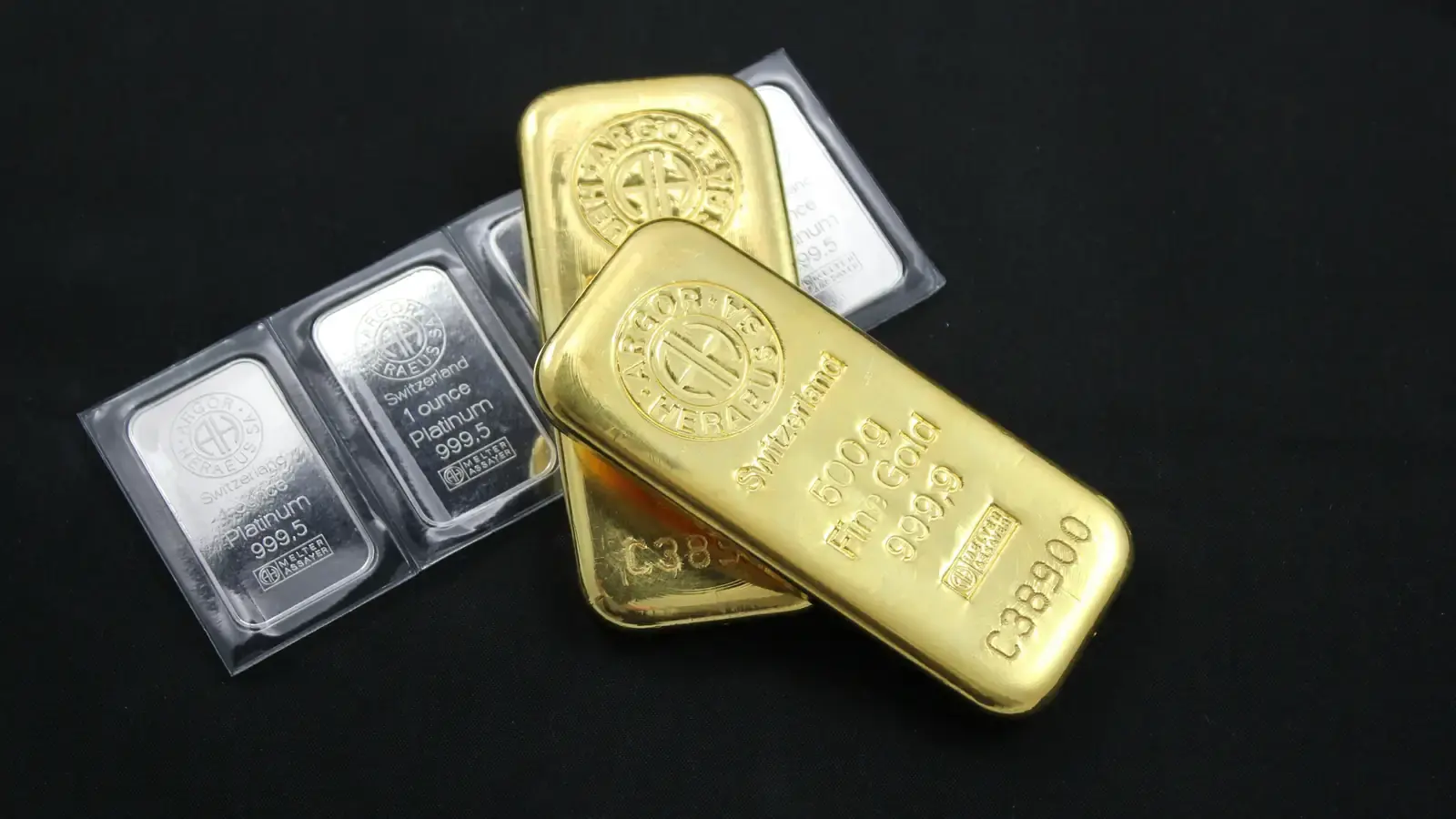
Bars are produced by private refiners in sizes from 1 g to 1 kg and, for the wholesale market, the 400 oz Good Delivery bar. They offer the lowest premium per gram because there is no face value, no national design and less minting work, and a PAMP or Valcambi bar comes sealed with an assay certificate and a unique serial number. Sovereign coins carry a face value and a national design and are the most liquid retail product on earth — any dealer will quote a buy-back price on a Maple Leaf or Krugerrand on sight. Rounds look like coins but are privately minted with no legal-tender status, and they usually sit between the two on premium while being harder to sell. Our ranking of the major bullion coins compares the five mainstream coins on purity, premium and liquidity.
Working Out the Premium: A Worked Example
The number that decides whether you bought well is the premium — what you paid above the spot value of the fine gold in the piece — not the gold price on the day. To compare two offers, convert each to a cost per gram of fine gold and compare that to spot per gram. One troy ounce is 31.1035 g, which is the only conversion you need.
Take an illustrative spot price of 100 currency units per gram (the figure is for arithmetic only — check the live price when you buy). A one-ounce coin offered at 3,265 holds 31.1035 g of fine gold, so you are paying 104.97 per gram: a premium of just under 5 percent. A 100 g bar offered at 10,250 is 102.50 per gram: a premium of 2.5 percent. Add shipping, insurance and any card surcharge to each before dividing, because a cheap headline price with expensive delivery can lose to a dearer one with free insured post. Our piece on what you actually pay over spot explains why the premium moves, and the companion on troy ounces and grams covers the units.
Choosing a Reputable Dealer
Selecting the dealer is the most consequential decision a new gold buyer makes, because a bad product can be re-sold and a bad dealer cannot be undone. Look for live pricing that shows the premium above spot rather than a static catalogue price; a published buy-back policy that states what they will pay for metal they did sell you and whether they take metal they did not; a verifiable trading history and a physical business address; and membership of a recognised trade body. Read independent reviews for the pattern of complaints rather than the star count. Our guide to trusted gold dealers in Europe applies these checks to named firms.
Avoid high-pressure sellers, especially those who cold-call or advertise heavily on television and radio. Legitimate dealers answer questions, publish detailed product specifications and are relaxed about you comparing prices elsewhere. A premium far below the market is a warning rather than a bargain: either the product is not what it claims to be or the dealer does not intend to deliver.
How to Place Your First Order
Once you have chosen a dealer, the process is straightforward. Create an account, complete the identity verification that anti-money-laundering rules require above the dealer’s threshold, and choose the product. The dealer will usually lock the price for a short window while payment clears; bank transfer generally attracts the lowest surcharge, while cards add convenience at a cost. Pay attention to the all-in figure on the confirmation page, not the per-coin price on the listing.
After payment the dealer ships by insured courier with signature on delivery. Always take the insured option and, for a larger order, consider splitting it into two shipments. Keep the invoice, the assay card and any certificate together and separate from the metal itself — they are what a future buyer will ask for, and what your insurer will ask for first. Where you buy and what you pay in tax differ by country, so the two checks worth making wherever you live are how your jurisdiction taxes bullion on purchase and on sale, and whether the dealer is a registered business you could pursue if something went wrong.
Storage and Insurance
A home safe bolted to a concrete floor gives you immediate access but makes insurance your problem: many household policies cap precious-metal cover at a modest figure, so read yours and arrange a scheduled-items or valuables policy if the holding is material. A bank safe-deposit box adds vault security but the contents are not insured by the bank, and access is limited to banking hours.
Allocated storage with a specialist vault — Brink’s, Loomis and the vaults attached to major dealers — means individually identified bars held in your name, audited and insured, usually for an annual fee charged as a percentage of value. The distinction between allocated and unallocated metal matters enormously if the provider ever fails, and our explainer on allocated versus segregated vault storage sets out the difference. Whichever route you choose, photograph each piece, record serial numbers and keep the inventory with your insurance documents. Our full comparison of storage options weighs cost against access for each.
Tax, Selling and the Bigger Picture
Tax treatment of gold varies by country. In Norway, gains on physical gold held as a personal investment are subject to capital gains tax, so keep meticulous records of purchase prices and dates. Across the EU, gold that meets the Article 344 definition above is bought without VAT, which is the single largest reason investment gold is cheaper to hold than silver or platinum in Europe. Selling is the mirror image of buying: sovereign coins and major-refiner bars with intact packaging attract the tightest spreads, and the dealer you bought from is usually the quickest buyer.
For context on who else is buying, the World Gold Council reported central bank net purchases of 863.3 tonnes in 2025 — down 21 percent on 2024’s 1,092.4 tonnes and the first year below 1,000 tonnes since 2021, yet still far above the 473-tonne annual average of 2010 to 2021. Poland’s central bank was the largest single buyer at 102 tonnes. Official-sector demand is one input into the price, not a forecast of it; gold can and does fall, and nothing here is advice to buy at any particular time.
Gold and collectibles carry risk and prices fluctuate — nothing here is financial advice. Consider your own situation or speak to a qualified adviser.
Related Collections
Sources
- legislation.gov.uk/eudr/2006/112/article/344
- lbma.org.uk/publications/the-otc-guide/london-good-delivery-gold-and-silver
- gold.org/goldhub/research/gold-demand-trends/gold-demand-trends-full-year-2025/central-banks
- royalmint.com/collect/archive/britannia-2018-one-ounce-gold-bullion-coin
- mint.ca/en/shop/bullion-products/2019-50-1-oz-9999-pure-gold-40th-anniversary-of-the-gml
Co-founder & Editor, NorwegianSpark SA
Thomas Lovas Lokoy is the co-founder of NorwegianSpark SA, the Norwegian company (org. 834 984 172) that runs NordicGilt. He reviews, fact-checks and approves every article before it is published. Articles are researched and drafted with AI assistance; Thomas is responsible for what goes live. Corrections: thomaslien@norwegianspark.com.
Frequently Asked Questions
What is the minimum amount of gold bullion I can buy?
One gram. Several mints and refiners sell 1 g bars and coins, and Chow Sang Sang sells a 1 g 999.9 ingot. The catch is cost: minting, assay and packaging cost roughly the same per piece whatever it weighs, so a 1 g unit carries a far higher premium per gram than a one-ounce coin or a 100 g bar. In the EU there is a second catch — Article 344(2) of the VAT Directive lets member states exclude bars and wafers of 1 g or less from the investment-gold exemption, so check how your country treats them before buying small.
Is it better to buy gold bars or gold coins?
Bars carry the lower premium per gram once you move above one ounce, so they suit a position you intend to hold whole. Legal-tender coins such as the Britannia, Maple Leaf, Krugerrand, Eagle and Philharmonic are recognised by every dealer, can be sold one at a time, and qualify as investment gold in the EU under the coin test rather than the bar test. For a first purchase a one-ounce sovereign-mint coin is the simplest product to buy and later sell.
Is gold bullion VAT-free?
In the EU, yes, if it meets the definition of investment gold in Article 344 of Directive 2006/112/EC: a bar or wafer of a weight accepted by the bullion markets at 995 thousandths or purer, or a coin of 900 thousandths or purer minted after 1800 that is or was legal tender in its country of origin and normally sells for no more than 80 percent above the value of its gold. Silver, platinum and palladium are not covered and attract VAT at the standard rate. The UK runs its own investment-gold rules after leaving the EU — check the current HMRC VAT notice for the wording that applies to you.
How do I verify the authenticity of gold bullion?
Buy from an established dealer and prefer products that arrive sealed with an assay card and serial number — PAMP Suisse Certicard bars and Royal Canadian Mint coins are examples. At home, check weight on a scale reading to 0.01 g and dimensions with a calliper against the mint's published specification: a 1 oz gold Britannia is 31.21 g and 32.69 mm, for instance. Electronic verifiers such as the Sigma Metalytics unit and ultrasonic thickness gauges give a second, non-destructive check. Our tutorial on testing gold at home walks through each method.
What is a Good Delivery bar and can I buy one?
A London Good Delivery gold bar is the wholesale unit the LBMA market trades: a bar containing between 350 and 430 fine troy ounces (roughly 10.9 to 13.4 kg) at a minimum fineness of 995.0, cast to a recommended 250 by 70 by 35 mm. It is what central banks and bullion banks hold, not what a private buyer takes delivery of. Retail investors get the same refiners' quality in 1 g to 1 kg bars, or buy a fractional interest in Good Delivery metal through an allocated vault service.
How much gold did central banks buy in 2025?
863.3 tonnes net, according to the World Gold Council's full-year 2025 Gold Demand Trends. That was 21 percent below the 1,092.4 tonnes bought in 2024 and the first year since 2021 below the 1,000-tonne mark, but still well above the 473-tonne annual average of 2010 to 2021. The National Bank of Poland was the largest buyer for the second year running at 102 tonnes.
Continue Reading
gold silver
Best Gold ETFs vs Physical Gold: Pros, Cons and Costs
Gold ETFs vs physical gold comparison for 2026 with fees, liquidity, risks and recommendations for every investor profile.
gold silver
Gold Storage Options: Home Safe, Vault or Allocated
Gold storage options compared: home safes, bank vaults and allocated vaulting, covering costs, security and insurance.
gold silver
Silver vs Gold: Which Precious Metal Should You Invest In?
Silver vs gold investment comparison covering returns, volatility, premiums and storage to help you pick the right metal.