Gold & Silver
How Many Grams Are in a Troy Ounce of Anything?
By Thomas Lovas Lokoy — researched and drafted with AI, then reviewed, fact-checked and approved by Thomas Lovas Lokoy (editorial policy) | Last updated: September 2026
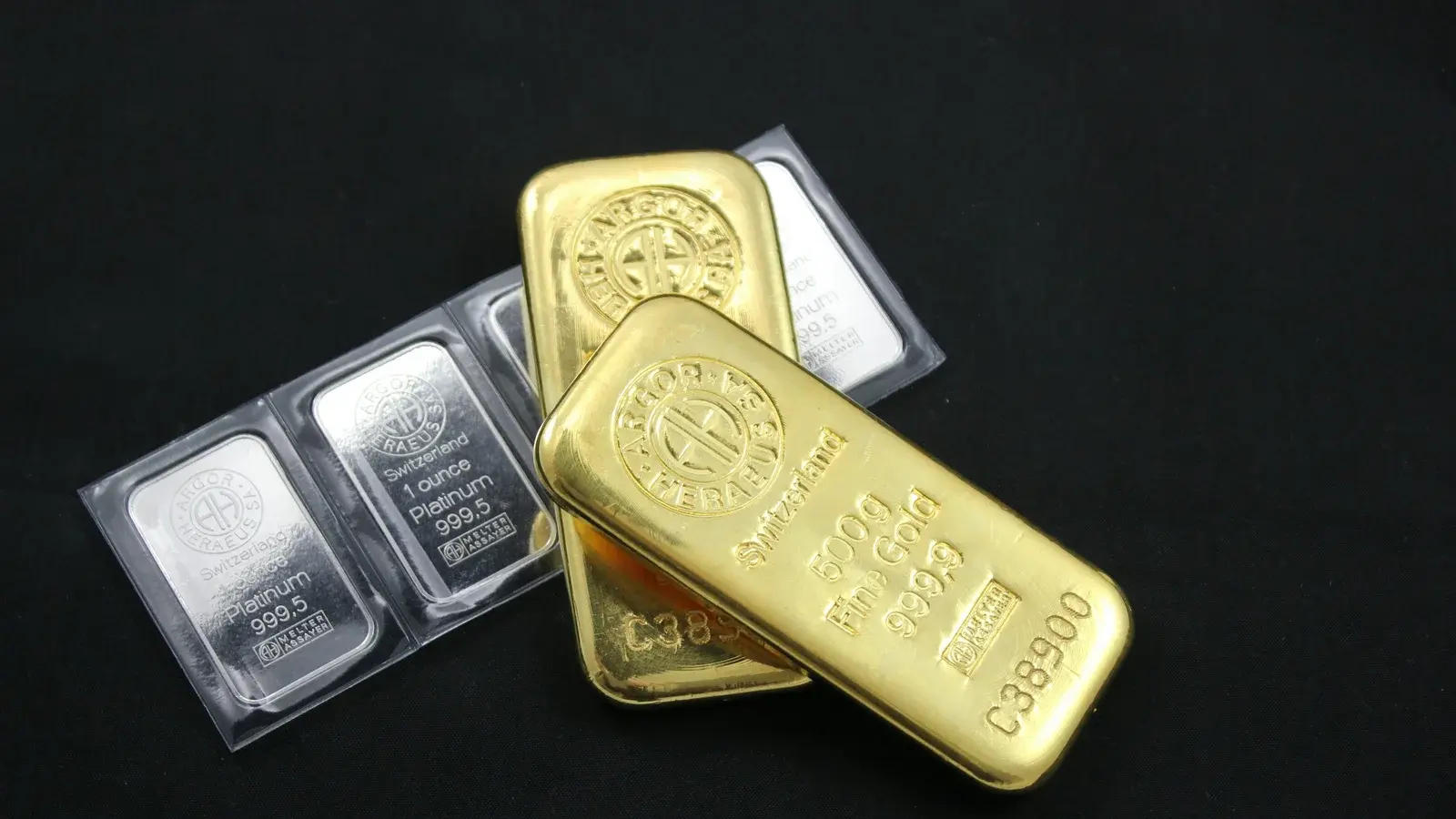
The answer first: 31.1034768 grams, and it is not about gold
A troy ounce is 31.1034768 grams. The figure is statutory, not conventional: the Weights and Measures Act 1985, Schedule 1, checked at legislation.gov.uk on 6 September 2026, defines it as "OUNCE TROY = 0.031 103 476 8 kilogram".
The more useful half of the answer is what the unit is. A troy ounce is a unit of mass. It is not a gold unit. It is used to weigh gold, silver, platinum and palladium because the precious metals trade inherited it, and it would weigh a bag of sugar just as accurately if anybody wanted it to. Nothing about the number is special to gold, which is why every article that explains it as "the gold ounce" leaves you slightly more confused than before.
The trap is the other ounce. The same schedule defines the pound as "0.453 592 37 kilogram" and the ordinary avoirdupois ounce as "1/16 pound". Divide one by sixteen and the everyday ounce comes to 28.349523125 grams. So the two ounces differ by very nearly three grams, and the precious metals one is the heavier. Confuse them on a 10 ounce quote and you are out by roughly 27.5 grams of metal, which is not a rounding error in any market.
That single confusion accounts for most of the anxious searching that brings people to this question, and it is worth fixing before anything else.
The statutory family, in one table
Everything below comes from the same Schedule 1 to the Weights and Measures Act 1985, checked 6 September 2026. Where a row is arithmetic rather than a printed value, the derivation is shown so you can check it.
| Unit | As the Act defines it | In grams |
|---|---|---|
| Ounce troy | 0.031 103 476 8 kilogram | 31.1034768 |
| Pound | 0.453 592 37 kilogram | 453.59237 |
| Ounce (avoirdupois) | 1/16 pound | 28.349523125 |
| Grain | 1/7000 pound | 0.06479891 |
| Pennyweight | 24 grains | 1.55517384 |
| Metric carat | 1/5 gram | 0.2 |
Two of those rows do more work than the others.
The pennyweight is 24 grains, and since a troy ounce is 480 grains it is exactly one twentieth of a troy ounce. It survives in the scrap and refining trade, particularly in North America, where an offer may be quoted per pennyweight. If you are comparing a per-pennyweight offer with a per-gram one, multiply the per-pennyweight figure by 20 and divide by 31.1034768 to get a per-gram equivalent, or simply convert both to a price for the whole piece.
The metric carat is where the worst confusion in the whole subject lives, because it sounds identical to the karat used for gold purity and has nothing to do with it. A metric carat is one fifth of a gram and it weighs gemstones. A karat, in the gold sense, is a twenty-fourth part of purity: 18 karat is 18 parts gold in 24, marked 750. One is a mass, one is a proportion, and the only thing they share is a homophone. If a listing describes a diamond ring as "18 carat", the number is almost certainly describing the gold and not the stone, and the two would be written differently in a careful catalogue. Our guide to 18K gold versus 999 gold covers the purity scale itself.
The units you meet buying gold outside the West
Two traditional units are still in daily commercial use, and a Western buyer meets them the moment they shop across a border.
The tael, or leung, in Hong Kong and the wider Chinese gold trade. Hong Kong Customs and Excise publishes the relationship as "1 tael (leung) = 1/16 catty", with "1 catty (kan) = 0.61 kilogram (approx.)", checked 6 September 2026. That is an official statement of the relationship and an explicitly approximate statement of the catty, so treat it as the shape of the conversion rather than as a figure to price from. The exact statutory value sits in the schedules to the Weights and Measures Ordinance, and if a tael price matters to your transaction, the number to use is the one the seller states on the invoice — in Hong Kong a gold retailer must issue an invoice or receipt stating the fineness, and the weight where the whole article is chuk kam (pure gold).
The tola, across South Asia and the Gulf. The tola is conventionally reckoned at 180 grains. That is a market convention rather than a statutory definition we can point you at, so it is labelled as one here. Taken at face value against the statutory grain above, 180 grains works out at about 11.66 grams, and you will also find dealers who round the unit to a flat 10 grams for convenience. Those two are not the same thing and the difference is roughly 14 per cent, so never assume which one a quote means. Ask, and get the answer in writing.
The rule that covers all of it. Do not price from a conversion you found online. Price from the conversion the seller commits to on the invoice, because that is the document that governs if the transaction is ever disputed. A conversion is a fact about units; an invoice is a fact about your purchase.
A worked example, using no prices at all
Suppose you have three quotes for a gold bar, and they are not comparable as written. One is per troy ounce for a 1 troy ounce bar. One is per gram for a 100 gram bar. One is per tola for a 10 tola bar, at 18 karat rather than fine gold.
Here is the sequence that makes them comparable. It works with any currency and any price, which is why no figures appear.
The four-step conversion
- Convert every weight to grams. A troy ounce is 31.1034768 grams. A tola, at the conventional 180 grains, is about 11.66 grams — but confirm with the seller which tola they mean.
- Convert every weight to grams of PURE gold, by multiplying by the fineness. Fine gold at 999 is 0.999 of the weight. 18 karat is 750 parts per thousand, so 0.750 of the weight.
- Divide each total price by its grams of pure gold. You now have three prices per gram of pure gold, in one currency, and they are directly comparable for the first time.
- Add the costs that are not in the headline: delivery, insurance, any import duty or sales tax assessed where the parcel arrives, and any payment surcharge. Then repeat step 3. That second number is the one that decides.
Step two is the one people skip, and it is the one that changes the ranking. A 100 gram bar at 999 contains 99.9 grams of gold; a 100 gram piece at 750 contains 75. Comparing their headline prices without converting is comparing two different quantities of metal.
Step four is the one that changes the winner. The spread over spot is where a gold purchase is actually decided, and small bars generally carry a proportionally larger premium than large ones because minting, assaying and packaging cost roughly the same whatever the piece weighs. Our guide to fractional bars sets out when paying that premium for divisibility is worth it and when it is simply a cost.
Where the troy ounce still governs the market
The unit is not merely a historical quirk. It is written into the specification of the wholesale market, which is why it will not go away.
The LBMA's Good Delivery technical specification defines the large gold bar that clears between London vaults with a gold content between 350 and 430 fine troy ounces — roughly 10.9 to 13.4 kilograms. "Fine troy ounces" there means troy ounces of gold content, not gross weight of the bar, which is a distinction worth holding on to: a bar's gross weight and its fine weight are different numbers, and it is the fine weight that is priced.
That is also why professional quotes are given per fine ounce and why a refiner's assay certificate states both figures. When you read a bar's documentation, the gross weight tells you what to expect on the scale and the fine weight tells you what you own.
The practical takeaway for a retail buyer is small and useful. Whatever unit a quote arrives in, you are always buying grams of pure gold, and every honest seller will tell you how many. If a seller will not state the fineness and the weight in a form you can convert, that reluctance is the information. What carat is 999.9 gold covers how fineness is expressed; this page covers how the weight beside it is expressed; together they are the whole of what you are buying.
Gold and collectibles carry risk and prices fluctuate — nothing here is financial advice. Consider your own situation or speak to a qualified adviser.
Related Collections
Sources
Co-founder & Editor, NorwegianSpark SA
Thomas Lovas Lokoy is the co-founder of NorwegianSpark SA, the Norwegian company (org. 834 984 172) that runs NordicGilt. He reviews, fact-checks and approves every article before it is published. Articles are researched and drafted with AI assistance; Thomas is responsible for what goes live. Corrections: thomaslien@norwegianspark.com.
Frequently Asked Questions
How many grams are in a troy ounce?
31.1034768 grams. The figure is statutory in the United Kingdom: Schedule 1 to the Weights and Measures Act 1985 defines the troy ounce as 0.031 103 476 8 kilogram. It is a unit of mass rather than a gold-specific unit, and the same schedule defines the ordinary avoirdupois ounce as one sixteenth of a pound, which works out at 28.349523125 grams. The two ounces differ by nearly three grams and the troy one is heavier.
Is a troy ounce the same as a normal ounce?
No, and this is the single most expensive confusion in the subject. A troy ounce is 31.1034768 grams. The everyday avoirdupois ounce, defined in the same schedule as one sixteenth of a pound of 0.453 592 37 kilogram, is 28.349523125 grams. On a ten ounce quantity the difference is about 27.5 grams of metal. If a quote does not say which ounce it means, ask before you calculate anything.
What is a pennyweight, and why do scrap buyers use it?
A pennyweight is 24 grains, and since a troy ounce is 480 grains it is exactly one twentieth of a troy ounce, or about 1.555 grams. It survives mainly in the scrap and refining trade, particularly in North America, where offers are sometimes quoted per pennyweight. To compare with a per-gram offer, convert both to a price for the whole item rather than trying to hold two units in your head.
Is a carat a weight or a purity?
Both words exist and they mean different things. The metric carat is a unit of mass equal to one fifth of a gram, and it weighs gemstones. The karat used for gold is a proportion: a twenty-fourth part, so 18 karat is 18 parts gold in 24, marked 750 parts per thousand. If a description mixes them, work out from context which is being measured, the stone or the metal, because the two numbers answer completely different questions.
How do I compare a gram price with a tola or tael price?
Convert everything to grams of pure gold, then divide the total price by those grams. The tael is published by Hong Kong Customs and Excise as one sixteenth of a catty, with the catty given as approximately 0.61 kilogram, so treat it as a shape rather than a precise figure and use the conversion the seller states on the invoice. The tola is conventionally reckoned at 180 grains, about 11.66 grams, but some dealers round it to a flat 10 grams. That is a difference of roughly 14 per cent, so always ask which one a quote means and get the answer in writing.
Why do bullion bars list two different weights?
Because gross weight and fine weight are different things. Gross weight is what the bar weighs on a scale, including everything that is not gold. Fine weight is the gold content, and it is what you are actually paying for. The wholesale market is specified this way too: the LBMA's Good Delivery technical specification defines a large gold bar by a gold content between 350 and 430 fine troy ounces. When you read an assay certificate, the fine weight is the number that matters.
Continue Reading
gold silver
Gold Price per Gram for 18k, 14k and 9k: How to Work It Out Yourself
How to turn the gold spot price into a price per gram for 24k, 22k, 18k, 14k and 9k gold, with a worked table, the hallmark numbers to look for, and why a buyer will offer less.
gold silver
How to Buy Gold Bullion in 2026: Complete Beginner's Guide
Gold bullion buying guide for 2026 covering bars, coins, dealers, storage and costs so you invest with confidence.
gold silver
Who Publishes the Price of Gold?
Twice a day an electronic auction produces the number the whole trade quotes against. What it is, who runs it, which currency it settles in, and why it is a benchmark rather than an offer to you.