Gold & Silver
Who Publishes the Price of Gold?
By Thomas Lovas Lokoy — researched and drafted with AI, then reviewed, fact-checked and approved by Thomas Lovas Lokoy (editorial policy) | Last updated: October 2026
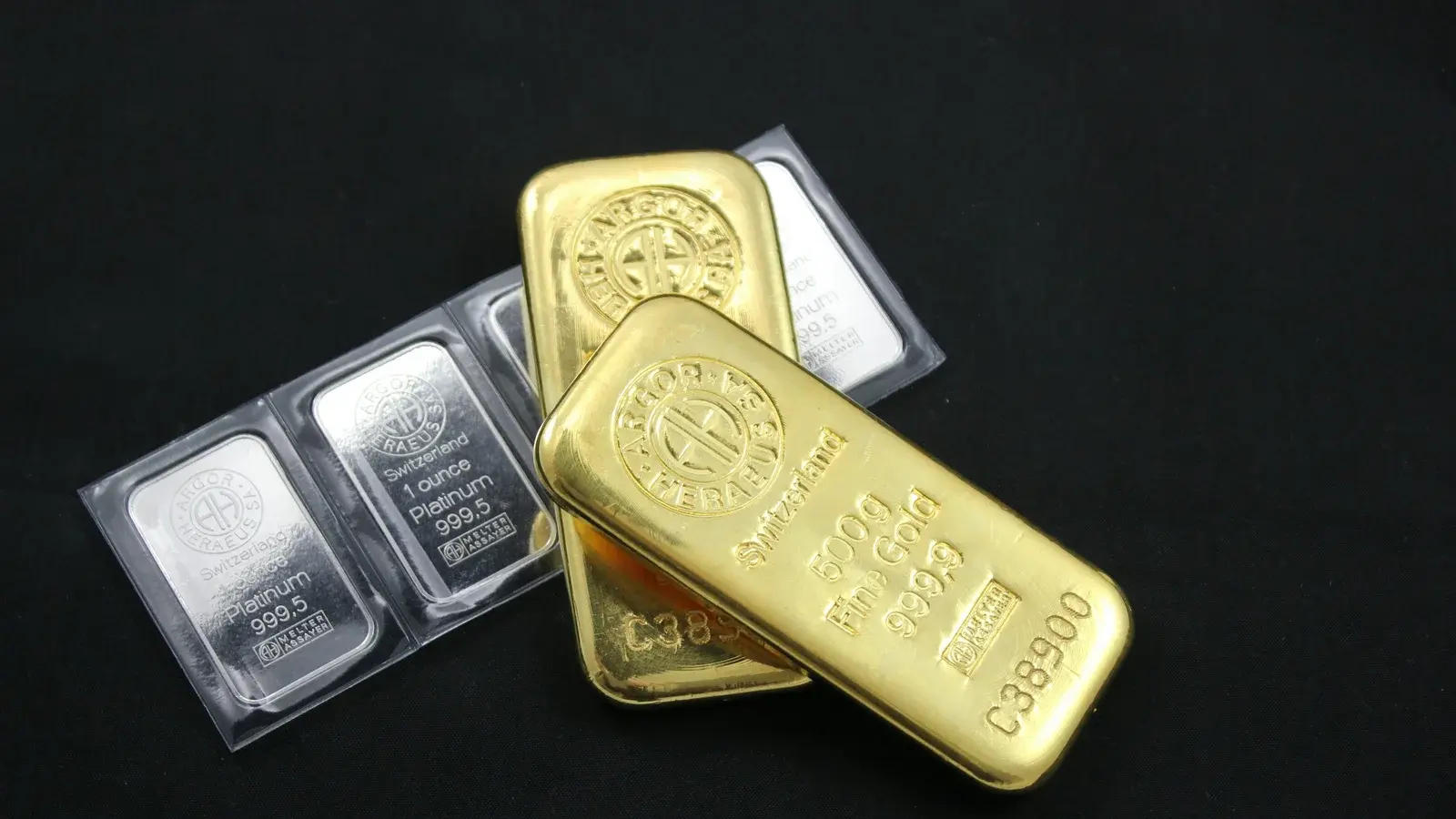
Nobody sets the price of gold. Somebody publishes a benchmark
The question almost everybody asks is who sets the gold price, and the honest answer is that the question contains a mistake.
Gold trades continuously, all day, in many places at once, between banks, refiners, miners, funds and dealers. There is no committee deciding what it is worth. What exists instead is a published benchmark: a number, produced at fixed times by a defined process, that the rest of the trade quotes against because everyone needs a common reference to write contracts and value inventory.
That benchmark is the LBMA Gold Price. Checked at lbma.org.uk on 6 September 2026, it "is administered independently by ICE Benchmark Administration (IBA)" — that is, the London Bullion Market Association owns and licenses the benchmark, and a separate regulated administrator runs it. The LBMA describes the platform as "electronic, tradeable, auditable and in line with the IOSCO Principles for Financial Benchmarks", and states that IBA's "Precious Metals Oversight Committee - which has broad representation from the Gold and Silver markets - oversees the definition and methodology of LBMA Precious Metals Prices".
That separation matters more than it sounds. The word tradeable in that description is doing the heavy lifting: the number is produced by an auction in which participants actually buy and sell metal, not by asking a panel what they think the price is.
What the auction actually is
The mechanics are simpler than the mystique around them.
Per ICE Benchmark Administration, checked at ice.com on 6 September 2026, the gold auctions run at "10:30 and 15:00 London time for gold" — two a day. "The precious metals auctions settle against U.S. dollars only." IBA "also publishes the benchmarks in British pounds and euros but these currencies are not tradeable directly through the auction."
The auction itself runs in rounds. IBA describes each round as opening at a published price, with participants entering how much they want to buy and sell during a set window — it gives 30 seconds as an example. If the gap between buying and selling at that price is outside a pre-defined imbalance threshold, the price is adjusted and a new round begins; once the imbalance falls within the threshold, the auction ends and that price becomes the benchmark. The LBMA lists fifteen accredited direct participants contributing to the gold auction.
Three consequences follow, and they are the whole practical content of the subject.
First, there are two prices a day, not one. A page quoting "the gold price" without saying which auction it is reporting is being imprecise. The morning and afternoon numbers can differ, and for anyone whose contract references one of them, which one it references is a material term.
Second, the benchmark is a dollar price. The sterling and euro figures are conversions published alongside it, not separate auctions. If you are buying in pounds or euros, part of what moves your price day to day is the exchange rate and not the metal at all — which is why gold can rise in one currency and fall in another on the same afternoon. Anyone outside the dollar area who has watched a gold chart behave oddly has usually been watching two variables and attributing both to one.
Third, an auction is a moment, not a stream. The number is a snapshot of where buying and selling balanced at a particular time. Between snapshots the market keeps moving, and the continuously quoted figure you see on a dealer's website is a spot price drawn from live trading rather than the benchmark itself. The two track each other closely and they are not the same object.
Benchmark, spot, and the price you will actually pay
Three different numbers get called "the gold price" in ordinary conversation, and telling them apart is the single most useful thing on this page.
| The number | What it is | Can you transact at it? |
|---|---|---|
| LBMA Gold Price | A benchmark produced at 10:30 and 15:00 London time, settling in US dollars | Only auction participants, in wholesale size |
| Spot | The continuously quoted wholesale price from live trading | Not as a retail buyer |
| Dealer buy and sell | What a dealer will sell you metal for, and pay you for it | Yes. This is the only one that is an offer |
The first two are reference points. Neither is available to a member of the public, and neither includes the cost of turning wholesale metal into a bar or coin in your hand.
The gap between spot and the dealer's selling price is the premium, and it pays for refining, minting, assaying, packaging, distribution, insurance, the dealer's inventory risk and the dealer's margin. It is proportionally larger on small pieces, because most of those costs are roughly the same whether the item weighs one gram or one kilogram. Our guide to the spread over spot works through how it behaves.
The gap between spot and the dealer's buying price is the other half, and it is the one people forget until the day they sell. What you actually get back covers that side.
A benchmark, then, is not an offer. It is a common yardstick that makes offers comparable — which is exactly what it is for, and exactly what it should be used for.
How to use the benchmark properly
Once you know what it is, it becomes a genuinely useful tool rather than a number to worry about.
A worked example. Suppose the afternoon benchmark is US$4,000 an ounce (an illustrative figure). Divided by 31.1035 grams per troy ounce, that is about US$128.60 a gram. Dealer A sells a one-ounce coin for US$4,200: 4,200 ÷ 4,000 = 1.05, a 5 percent premium over the benchmark. Dealer B sells a 100 g bar for US$13,300: 13,300 ÷ 100 = US$133.00 a gram, about 3.4 percent over. Neither number is good or bad on its own — coins and small items cost more to make — but expressing both against the same benchmark, taken at the same time, turns two incomparable price tags into two comparable percentages. Ask each dealer for its buy-back price on the same basis and you have the whole round-trip cost.
Four things it is good for
- Comparing dealers on the same afternoon. Convert every quote to a percentage over the same reference price, taken at the same moment. Dealer premiums become visible immediately and differences of a few per cent stop hiding behind different weights and purities.
- Sanity-checking a valuation. A scrap or probate valuation should be explicable as a percentage of the metal content at a stated reference price on a stated date. If it cannot be explained that way, ask how it was reached.
- Understanding your own currency exposure. If you buy in a currency other than dollars, plot the gold price in your currency and in dollars over the same period. The difference is the exchange rate, and knowing how much of your gain or loss is metal and how much is currency changes how you think about the holding.
- Reading contracts and fund documents. Products that reference a benchmark will name which one and which auction. That is a term worth reading rather than skipping.
What it is not good for
It is not a forecast, and no benchmark methodology contains one. This site has a separate page on why forecasting the gold price is difficult, and the summary is that a benchmark tells you where the market cleared this afternoon and nothing whatever about tomorrow.
It is also not a valuation of your specific jewellery. A hallmarked, well-made or branded piece may be worth more than its metal to a buyer who wants that piece, and an unbranded one is usually worth less than its metal after a refiner's margin. The benchmark values the metal, not the object.
And it is not the price you will be quoted for a small quantity. Expecting to buy a one-gram bar at benchmark plus nothing is expecting a refinery, a mint, a distributor and a dealer to work for free. The useful question is never why the premium exists but whether this dealer's premium is competitive with the next one's, measured at the same moment against the same reference, on the same fineness and weight — which is a question you can now answer.
One last practical note. Because the auctions settle in dollars only, and because the sterling and euro figures are published conversions, a dealer in Europe quoting you a price has made a currency decision as well as a metal one. Ask when the rate was struck. On a volatile day it is worth knowing, and a dealer who cannot tell you is telling you something else. Which dealers to consider in Europe covers what else to ask before ordering, and if the quote arrives in an unfamiliar unit, troy ounces, grams, tolas and taels will convert it.
Gold and collectibles carry risk and prices fluctuate — nothing here is financial advice. Consider your own situation or speak to a qualified adviser.
Related Collections
Where to Buy
Co-founder & Editor, NorwegianSpark SA
Thomas Lovas Lokoy is the co-founder of NorwegianSpark SA, the Norwegian company (org. 834 984 172) that runs NordicGilt. He reviews, fact-checks and approves every article before it is published. Articles are researched and drafted with AI assistance; Thomas is responsible for what goes live. Corrections: thomaslien@norwegianspark.com.
Frequently Asked Questions
Who sets the price of gold?
Nobody sets it. Gold trades continuously between banks, refiners, miners, funds and dealers, and what exists is a published benchmark rather than a decision. The LBMA Gold Price is administered independently by ICE Benchmark Administration, which the LBMA describes as an electronic, tradeable and auditable platform in line with the IOSCO Principles for Financial Benchmarks, with IBA's Precious Metals Oversight Committee overseeing the definition and methodology.
How often is the LBMA Gold Price published?
Twice each business day. According to ICE Benchmark Administration, the gold auctions run at 10:30 and 15:00 London time. That means there are two benchmark numbers a day, not one, and they can differ. If a contract or a fund document references the benchmark, which of the two auctions it references is a material term worth reading.
Why is the price I am quoted higher than the gold price?
Because a benchmark is a wholesale reference, not an offer to a member of the public, and because turning wholesale metal into a bar or coin in your hand costs money. The gap covers refining, minting, assaying, packaging, distribution, insurance, the dealer's inventory risk and the dealer's margin. It is proportionally larger on small items, because most of those costs are much the same whether the piece weighs one gram or one kilogram.
Is the spot price the same as the LBMA Gold Price?
No. The benchmark is a snapshot produced by an auction at a fixed time. Spot is the continuously quoted wholesale price from live trading, and it keeps moving between auctions. The two track each other closely and they are different objects, which matters when a valuation, a contract or a dealer quote says it is based on one of them.
How do I use the benchmark to compare dealers?
Take every quote at the same moment, convert each one to a price per gram of pure gold, and express it as a percentage over the same reference price. That strips out differences in weight, fineness and currency and leaves you comparing the only thing that varies, which is the dealer's premium. Then repeat the exercise including delivery, insurance and any import tax assessed where the parcel arrives, because that second number is the one that decides.
Continue Reading
gold silver
Gold Price per Gram for 18k, 14k and 9k: How to Work It Out Yourself
How to turn the gold spot price into a price per gram for 24k, 22k, 18k, 14k and 9k gold, with a worked table, the hallmark numbers to look for, and why a buyer will offer less.
gold silver
How to Buy Gold Bullion in 2026: Complete Beginner's Guide
Gold bullion buying guide for 2026 covering bars, coins, dealers, storage and costs so you invest with confidence.
golf
Guide to Spacing Golf Wedges: Lofts, Bounce and Grinds Explained
Fourteen clubs is the limit, and the bottom of the bag is where most golfers waste them. How to work out your wedge gaps, what bounce actually does, and which grind suits your turf.