Gold & Silver
What Carat Is 999.9 Gold? The Straight Answer, and What the Number Means
By NorwegianSpark Editorial — written with AI assistance and reviewed by the NorwegianSpark SA editorial team | Last updated: September 2026
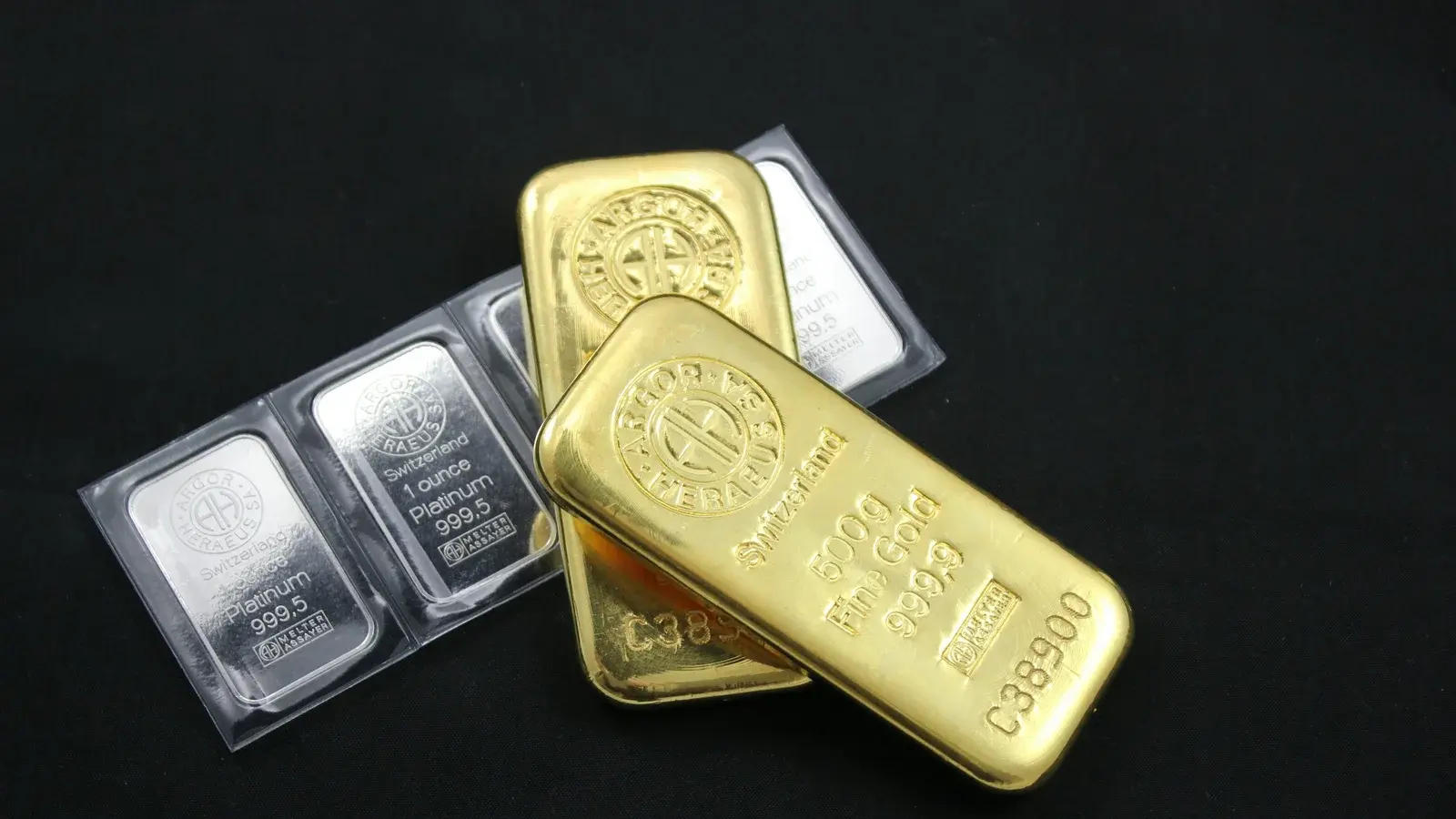
The direct answer, and where the carat scale stops
999.9 gold is 24 carat. That is the whole answer, and the rest of this page explains why the question keeps coming up.
The carat scale measures gold in twenty-fourths. Twenty-four parts gold out of twenty-four is pure gold, so 24 carat is the top of the scale and nothing sits above it. A bar stamped 999.9 is 24 carat. A bar stamped 999 is also 24 carat. So is a bar stamped 995. The scale simply has nowhere further to go.
That is the source of the confusion. People see 999.9 and reasonably assume it must correspond to something above 24, because it is visibly a bigger number than 999. It does not. The two figures are not on the same scale at all. Carat counts twenty-fourths; millesimal fineness counts thousandths. Once gold is pure enough to be called 24 carat, the carat system has run out of resolution, and the millesimal number is the only one still saying anything useful.
This is why bullion is priced and traded in millesimal fineness and almost never in carats. A refinery needs to distinguish 999 from 999.9. The carat scale cannot make that distinction, so the wholesale market does not use it.
The two notations, side by side
Carat is a fraction in twenty-fourths. Millesimal fineness is parts per thousand. They measure the same thing, and either can be converted into the other, but jewellery markets grew up on one and bullion markets on the other.
| Millesimal fineness | Carat | Where you meet it |
|---|---|---|
| 999.9 | 24 carat | Four-nines fine. Investment bars, grain and coins. |
| 999 | 24 carat | Three-nines fine. The most common bullion stamp. |
| 995 | 24 carat, commonly rounded | The minimum fineness for a London Good Delivery large bar. |
| 916 | 22 carat | Traditional gold bullion coins, including the Sovereign and the Krugerrand. |
| 750 | 18 carat | The standard for fine jewellery in most of Europe. |
| 585 | 14 carat | Hard-wearing jewellery, widespread in the United States and Germany. |
| 375 | 9 carat | Entry-level jewellery, common in the United Kingdom. |
Read the table in either direction. 916 is 22 carat, which is 91.6 per cent gold. 750 is 18 carat, which is 75 per cent gold. 585 is 14 carat and 375 is 9 carat, and in both cases most of the piece by weight is something other than gold. For what each of those grades is used for and how its metal value is worked out, see our guide to 24K, 22K and 18K gold.
One row deserves a note. 995 is not exactly 24 carat — the arithmetic puts it a shade under — and it is described as 24 carat by convention rather than by precise conversion. If a precise figure matters to you, use the millesimal number and ignore the carat label.
What the number 999 on a piece of gold actually asserts
A fineness stamp is a claim about minimum content. A bar marked 999 asserts that in every thousand parts by weight, at least 999 are gold. In the UK a hallmark guarantees that the whole article is no less than the fineness indicated (Hong Kong’s 999.9 jewellery trade works under its own marking rules, which our Chow Sang Sang review explains); our hallmarks guide explains each of the marks you will see beside the number. In the United States, federal rules under the National Stamping Act allow a small tolerance (three parts per thousand for gold articles without solder).
Two things follow from that, and both matter more than the number itself.
First, the claim covers the whole mass, not the surface. A stamp is struck into the face of a bar, but what it asserts is the composition of everything underneath it. This is precisely why a stamp alone is weak evidence: the mark is on the outside and the claim is about the inside.
Second, the stamp is a regulated statement in some countries and an unregulated one in others. It is never decoration. Where a fineness description is governed by law, describing metal as finer than it is exposes the seller to penalties. Where it is not, the stamp is worth precisely as much as the reputation of whoever struck it — which is the subject of the last section on this page.
999 against 999.9: what the extra nine changes, and what it does not
For almost every private buyer, the practical difference between three-nines and four-nines gold is close to nothing.
Both are investment-grade. Both are bought and sold against the same spot price. A dealer quoting you for a 999 coin and a 999.9 bar of the same weight is quoting on the same underlying metal price in both cases, with the difference in what you pay driven by the product — its size, its mint, its coin premium — rather than by the fourth nine.
The extra nine starts to matter in narrower places. Some industrial processes specify four-nines because trace elements interfere with the application. Certain depositories and exchanges specify a fineness for what they will accept into a particular product. And some mints simply produce to four-nines as a matter of house standard, which makes it a mark of the manufacturer as much as a specification.
What the extra nine does not do is make the metal meaningfully more valuable per gram to a private holder. If you are choosing between two products and the only difference you can identify is 999 against 999.9, that is not the difference worth deciding on. The refiner's reputation, the form, and what it costs you over spot all matter more.
The 995 line, and why 99.50 exists at all
995 turns up constantly in gold documentation and rarely gets explained.
It is the minimum fineness for a London Good Delivery large bar — the roughly 400-ounce wholesale bars that sit in bullion vaults and settle between institutions. A bar below that fineness is not Good Delivery, whatever else is true of it.
LBMA's current specification states the 995.0 floor without setting out its history. Many refiners produce finer bars than that, but a large bar at 995 still meets the standard.
For a private buyer the practical consequence is small but worth knowing: 995 on a bar is not a warning sign. It is a wholesale standard being met, not a corner being cut.
Where the number appears, and who put it there
The same number can arrive on a piece of gold by three different routes, and they do not carry the same weight.
An official hallmark is struck by an independent assay office after the metal has been tested. The office is not the seller and has no interest in the outcome, which is the entire point of the arrangement. In the United Kingdom this is a statutory system, and the assay offices — the Goldsmiths' Company Assay Office in London among them — operate under the Hallmarking Act.
A refiner's or mint's stamp is applied by the manufacturer. It typically carries the fineness, the weight, the refiner's mark and often a serial number. It is a manufacturer's guarantee, and from a serious accredited refiner it is a strong one — but the party making the claim is the party selling the metal.
An assay card is the sealed package a small bar often arrives in, with a certificate stating weight and fineness. Its value lies partly in the certificate and partly in the seal being intact.
The distinction is not pedantry. An independent hallmark and a self-applied stamp are different kinds of evidence, and the countries that require the first do so precisely because the second is not always enough.
Hallmarking is national, not universal
There is no single worldwide hallmarking authority, and this catches people out when they buy across borders.
Some countries operate compulsory statutory hallmarking, where gold above a certain weight must be independently assayed and marked before it can legally be sold as gold. The United Kingdom works this way, and so does India through its national standards body. In those markets, an unmarked piece being sold as gold is a problem on its face.
Other large markets do not require an independent mark at all. In the United States there is no government assay office striking hallmarks on retail jewellery; what exists instead is federal regulation of how fineness may be described and marked when a seller chooses to mark it. A ring can be sold perfectly legally with a maker's own quality stamp and no independent verification behind it.
Neither approach is inherently better, and both markets sell enormous quantities of honest gold. But it does mean the same 750 stamp carries a different amount of third-party assurance depending on where the piece was made and sold, and a buyer who assumes a stamp is always independently verified is assuming something that is only true in some countries.
This page does not attempt to list the weight thresholds, tolerances or exemptions for each jurisdiction. They differ, they change, and a summary would be out of date before it was useful. If a specific purchase turns on one, the assay office or standards body for that country is the source to check.
Why 999.9 gold is not made into jewellery you actually wear
Pure gold is soft. That is not a figure of speech — it is the practical property that decides what gold gets made into.
A 24-carat ring worn daily marks, scratches, loses its edges and slowly deforms. Nothing is wrong with it; that is simply how the metal behaves when nothing has been added to harden it. Alloying gold with copper, silver or palladium produces a metal that survives contact with door handles, keyboards and other hands, at the cost of purity. 18 carat and 14 carat exist because that trade is worth making for something worn every day.
Bullion has the opposite requirement. A bar is not handled, not worn and not knocked against anything; it sits in a vault or a safe. Softness costs nothing there, and purity is the entire point, so bullion is made as fine as the refinery can economically produce.
This is also why comparing a 999.9 bar and an 18-carat ring as though they were competing products misses what each is for. Our comparison article covers the choice between buying pure gold to hold and alloyed gold to wear.
What the stamp does not tell you
A fineness number is a claim, and a claim is worth what the authority behind it is worth. This is the part that a conversion table cannot give you.
Counterfeiting exists, and the counterfeits that matter are not the crude ones. A bar can carry a convincing stamp over a base-metal core, and the surface will test as gold precisely because the surface is gold. The stamp is on the outside; the fraud is on the inside. This is the same point as earlier in this page, and it is worth repeating because it is the one that costs people money.
What actually reduces the risk is unglamorous: buy from accredited dealers with a traceable chain back to a recognised refiner, keep assay packaging sealed where it exists, prefer products with a serial number tied to documentation, and for anything substantial use non-destructive testing rather than judging by eye. Weight and dimensions are also a useful check, because the metals typically used to fake gold do not share its density, and a bar that is right on weight and wrong on size is telling you something.
None of that is about the number stamped on the metal. The number is where the question starts, not where it ends.
Gold and collectibles carry risk and prices fluctuate — nothing here is financial advice. Consider your own situation or speak to a qualified adviser.
Related Collections
Frequently Asked Questions
How many carats is 999.9 gold?
999.9 gold is 24 carat. Twenty-four carat is the top of the carat scale, so nothing is rated above it. The 999.9 figure is millesimal fineness — parts per thousand — which measures the same purity on a finer scale than carats can.
What does 999 mean stamped on gold?
It is a claim of minimum fineness: at least 999 parts gold in every thousand by weight, or 99.9 per cent. It applies to the whole mass of the item, not just the surface, and it is a regulated statement in some countries and an unregulated manufacturer's claim in others.
Is 999.9 gold better than 999 gold?
For a private holder, barely. Both are 24 carat and both trade against the same spot price. Four-nines fineness matters for some industrial uses and for the specifications of certain depositories and products, but it does not make the metal meaningfully more valuable per gram. The refiner, the form and the premium over spot all matter more than the fourth nine.
What does 99.50 mean in gold purity?
99.50 per cent, written as 995, is the minimum fineness for a London Good Delivery large bar — the wholesale bars used for institutional settlement. It is the floor in LBMA's current Good Delivery specification. A 995 bar is meeting a wholesale standard, not falling short of one.
Why is 999.9 gold not used for rings and bracelets?
It is too soft. Pure gold scratches and deforms under daily wear, so jewellery meant to be worn is alloyed with copper, silver or palladium to harden it, which brings the purity down to 18 carat (750) or 14 carat (585). Bullion sits in a vault and is never handled, so softness costs nothing and purity wins.
What is the difference between a hallmark and a refiner's stamp?
A hallmark is struck by an independent assay office after testing, by a party with no interest in the sale. A refiner's or mint's stamp is applied by the manufacturer as its own guarantee. Both can be entirely trustworthy, but only one is third-party verification — and whether an independent mark is required at all depends on the country.
Continue Reading
gold silver
How to Buy Investment Gold: Bars vs Coins
Bars carry the lowest premium; coins are easier to sell in parts. How to read a premium, which fineness actually qualifies as investment gold, and what to keep.
gold silver
The Spot Price Is Not the Price. What You Actually Pay for Gold.
Part 1 of 3. Spot is a wholesale reference for unallocated metal in tonne lots. What a retail buyer pays sits above it — and the gap is the single most controllable cost in physical gold.
gold silver
18K Gold vs 999 Gold: Which Should You Actually Buy?
18K gold is 750 parts gold per thousand; 999 gold is 99.9% pure. What that means for durability, hallmarks and resale — and which to buy for jewellery versus bullion.